
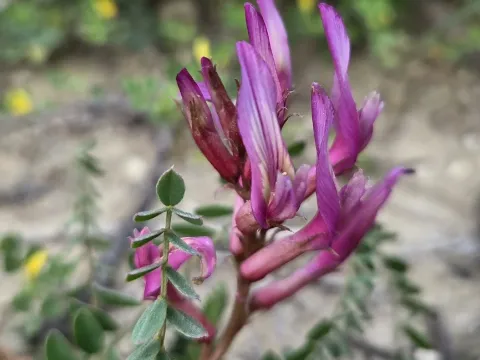
Astragalus monspessulanus
Astragalus monspessulanus
Astragalus monspessulanus is a perennial legume species characterized by a deep root system and high nitrogen-fixing capacity. The seeds have a hard seed coat, which often requires scarification to ensure uniform and rapid germination after planting.
What the section contains
Astragalus monspessulanus
The ideal time for sowing is early spring when soil moisture is sufficient to support initial growth. Seeds should be planted at a shallow depth of 2 to 3 centimeters in well-prepared, loose soil to facilitate proper establishment.
During the first year, this species focuses mainly on establishing its root system, showing slower shoot growth compared to fast-growing cover crops. Weed control during this early establishment phase is essential for optimal stand density.
It is commonly used in mixtures with perennial grasses, which helps stabilize the soil and improves the nutritional value of forage. The plant's ability to fix atmospheric nitrogen provides an additional fertility boost to the field over time.
After the establishment phase, the plant becomes highly resilient to environmental stressors. Proper seedbed preparation is the most critical factor for success, as it ensures adequate seed-to-soil contact for long-term viability.
This species is native to the Mediterranean region and parts of Europe, making it highly drought-tolerant. It thrives in open, sunny environments and is well-suited for exposed slopes where other crops might struggle.
It has low fertility requirements and can grow effectively in rocky, calcareous, or degraded soils. Its deep root system allows it to reach water and nutrients at depths that are unavailable to common agricultural plants.
While it prefers neutral to slightly alkaline soil conditions, it is generally adaptable to various soil types. The most important requirement is good drainage, as the species is susceptible to root rot if waterlogged for extended periods.
Minimal fertilization is required, specifically avoiding excessive nitrogen, which can inhibit the plant's natural nitrogen-fixing symbiosis. Phosphorus and potassium applications may be beneficial if soil tests indicate extreme deficiencies.
The crop is highly effective for soil conservation and erosion control, especially in semi-arid regions. Its biomass provides excellent ground cover, protecting the topsoil from wind and water erosion throughout the year.
The primary diseases affecting this crop include powdery mildew and various types of fungal root rots. These are most common in areas with poor drainage or high humidity, where airflow is restricted between plants.
Insect pests such as weevils and aphids can occasionally damage young shoots or roots. While these pests can impact growth, the robust nature of the plant usually allows it to recover without the need for extensive intervention.
Biological pest control methods, such as encouraging natural predators, are preferred in agricultural systems focusing on sustainability. Regular field monitoring is encouraged to identify any localized outbreaks early in the season.
Preventative measures include ensuring proper plant spacing to improve ventilation and using disease-resistant cultivars when available. Avoiding overgrazing or excessive mowing helps maintain plant health and immunity to diseases.
The overall susceptibility to pathogens is low, provided the plant is grown in its preferred habitat. Agronomic success relies primarily on site selection and ensuring that the soil is not overly compacted or saturated.