
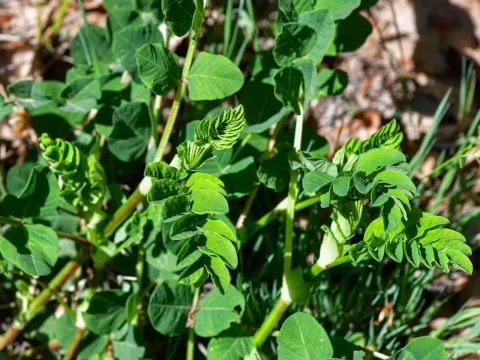
Sweet milk-vetch
Astragalus glycyphyllos
Sweet milk-vetch (Astragalus glycyphyllos) is a hardy perennial legume known for its robust growth and nitrogen-fixing properties. Sowing is typically performed in early spring as soon as the soil is workable, which allows for optimal establishment before the peak summer heat.
What the section contains
Sweet milk-vetch
Seed preparation is a critical agronomic step, as the seeds possess a hard, impermeable seed coat. Mechanical scarification is strongly recommended to facilitate water uptake and ensure uniform germination across the field.
The standard seeding rate ranges from 12 to 15 kg per hectare, with rows spaced approximately 15 to 20 cm apart. Seeds should be buried at a shallow depth of about 2 cm to maintain adequate moisture contact while allowing for swift emergence.
During the first year, sweet milk-vetch prioritizes deep root system development, resulting in relatively slow top growth. Farmers should implement diligent weed control strategies during this phase to minimize competition and ensure the young crop has sufficient space to thrive.
As the plant establishes itself from the second year onwards, it forms a dense, vigorous canopy. This development phase is when the plant begins to show its full potential for biomass production and soil improvement, serving as a reliable long-term agricultural asset.
This crop is highly adaptable, thriving in a variety of soil types ranging from loamy to sandy textures. It performs best in soils with a neutral pH, although it exhibits significant tolerance for slightly acidic or alkaline conditions compared to other legumes.
One of the key requirements for successful cultivation is adequate soil drainage. While sweet milk-vetch is drought-tolerant, it does not tolerate waterlogging, which can cause root rot and significantly reduce stand density and plant vigor over time.
The crop is noted for its exceptional winter hardiness, allowing it to withstand harsh climatic conditions in temperate regions. It remains a reliable forage choice even in areas with fluctuating winter temperatures and minimal snow cover.
Sunlight exposure is essential for high yields. Although it can tolerate partial shade, planting in open, sunny fields promotes higher biomass accumulation and better health, as it facilitates proper air circulation within the stand.
Soil fertility management should focus on phosphorus and potassium levels, which support strong root growth and efficient nitrogen fixation. Routine soil testing is advised to maintain optimal nutrient levels and ensure long-term productivity of the legume stand.
The biomass yield of sweet milk-vetch is significant, making it a valuable candidate for forage production. Depending on soil quality and environmental moisture, yields of green matter can range from 15 to 25 metric tons per hectare per season.
The crop is capable of producing two healthy cuts under ideal conditions, provided there is sufficient moisture after the first harvest. Careful management of the cutting interval is key to balancing annual yield with the plant's long-term endurance.
Seed production is an important secondary objective for many farms, with yields typically falling between 300 and 500 kg per hectare. Proper timing of the harvest is crucial to avoid seed shattering and maximize the quality of the harvested grain.
The nutritional profile of sweet milk-vetch is high, characterized by a good balance of protein, fibers, and essential minerals. This nutrient density provides high-quality sustenance for cattle, sheep, and other livestock throughout the grazing or stall-feeding season.
Sweet milk-vetch stands can remain productive for 5 to 7 years. Following this period, vigor naturally begins to decline, indicating the need for field rotation or renovation to restore soil structure and nutrient availability for future crops.
Sweet milk-vetch generally possesses high resistance to major diseases, though humidity-related issues like powdery mildew can appear in poorly ventilated or excessively dense stands. Maintaining proper spacing is a primary preventative measure.
Pests such as weevils represent the most common challenge, as they can cause damage to young foliage. However, their impact is usually localized, and natural biological controls are often sufficient to keep their populations below the economic injury level.
Root-related pathologies occur primarily in waterlogged soils where the lack of oxygen facilitates the growth of harmful fungi. Correcting soil drainage is the most effective way to prevent these issues and ensure a healthy root system.
Good agricultural practices, including systematic crop rotation, play a vital role in preventing the build-up of pathogens. By avoiding continuous monocropping, farmers can significantly lower the risks of localized infection and ensure better overall crop health.
The inherent resilience of the plant contributes to its stability in the field. With minimal pressure from pests or diseases, sweet milk-vetch is considered a low-input crop, requiring few chemical treatments to achieve stable and productive growth.
The optimal harvest window is at the onset of flowering. At this phenological stage, the plant captures the peak concentration of nutrients, ensuring the highest possible quality of forage for livestock consumption.
For hay production, rapid drying in the field is necessary to preserve the leaves, which hold the highest concentration of protein. Using conditioners during the mowing process helps accelerate the drying rate and reduces weather-related losses.
Mowing height should be maintained at 7–10 cm above the ground to protect the crown and growing points of the plants. This ensures quick regrowth after harvest and prevents damage to the root system, which is crucial for subsequent production.
Following the harvest, fertilization can assist in stimulating the next growth cycle. Ensuring the plants have enough time to accumulate energy stores in their roots before the onset of winter is a prerequisite for successful overwintering.
Storage of the harvested crop requires dry, well-ventilated conditions to prevent mold formation and spontaneous heating. Maintaining high-quality storage ensures that the nutritional benefits of the crop are preserved until it is needed for feeding.