
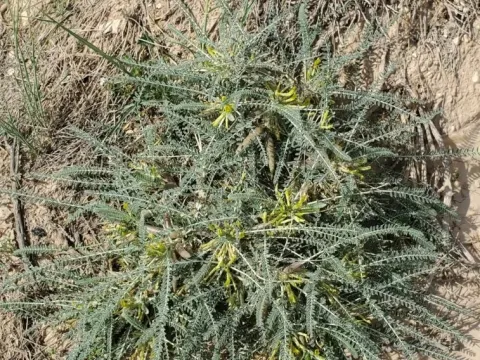
Astragalus dactylocarpus
Astragalus dactylocarpus
Astragalus dactylocarpus belongs to the Fabaceae family. This perennial herb is recognized for its potential as a robust forage crop, particularly suitable for semi-arid environments where other legumes might struggle to survive.
What the section contains
Astragalus dactylocarpus
The sowing season typically begins in early spring, once soil temperatures reach 8–10 degrees Celsius. Early planting is crucial to allow the plant to establish its deep taproot system before the onset of extreme summer heat.
Seed scarification is highly recommended to break dormancy and ensure uniform germination across the field. Seeds are usually planted at a depth of 2–3 cm in rows spaced approximately 15–20 cm apart.
The seeding rate ranges between 10–15 kg per hectare. Proper soil compaction after sowing is necessary to ensure good seed-to-soil contact, which significantly improves the chances of successful establishment in dry conditions.
As the plant grows slowly during its first year, maintaining a weed-free environment is essential. Integrated weed management practices during the establishment phase will prevent competition for limited moisture and nutrients.
Astragalus dactylocarpus is a true xerophyte, perfectly adapted to environments with limited rainfall. Its survival strategy involves deep root penetration, which allows it to tap into moisture reserves deeper within the soil profile.
The species prefers well-drained, neutral to slightly alkaline soils, including chestnut and gray desert soils. It exhibits a remarkable tolerance for salinity, making it an excellent candidate for reclaiming degraded lands.
High light intensity is a fundamental requirement for the optimal growth of this plant. It is intolerant to shade, and growers should ensure that fields remain open and free from any structures or vegetation that could block sunlight.
Nutrient management focuses primarily on phosphorus and potassium application to stimulate root development. Nitrogen fertilization is rarely necessary, as the plant maintains a symbiotic relationship with nitrogen-fixing bacteria.
The crop is highly resilient to temperature fluctuations characteristic of continental climates, capable of surviving both scorching summers and sub-zero winter temperatures without significant damage to the crown.
The primary use of Astragalus dactylocarpus is as high-quality forage for sheep, goats, and cattle. The biomass is rich in proteins and essential minerals, providing a nutritious feed source that improves livestock productivity.
Yields vary depending on local rainfall and soil fertility, generally ranging from 10 to 15 tonnes of green mass per hectare. In irrigated or naturally favorable areas, the crop supports multiple cuts per season.
Harvesting should coincide with the peak flowering stage to ensure the best balance of protein content and biomass volume. Delaying the harvest can lead to lignification of the stems, reducing the nutritional value of the hay.
The crop shows strong regrowth potential after cutting, provided that soil moisture remains within manageable levels. This resilience makes it a valuable asset for maintaining permanent or semi-permanent pastures.
Proper storage is essential to preserve the nutritional density of the hay. Drying the forage thoroughly and keeping it in a cool, ventilated area will prevent spoilage and ensure a stable feed supply throughout the winter.
Nodule weevils are among the most common pests affecting this crop, as they feed on roots and inhibit nitrogen fixation. Crop rotation is the most effective preventative measure to disrupt the lifecycle of these insects.
Powdery mildew and rusts can develop during periods of high humidity. Ensuring proper plant spacing to facilitate airflow through the canopy is the primary cultural practice to mitigate the risk of fungal outbreaks.
Root rot is typically associated with waterlogged conditions. Avoiding low-lying or heavy clay soils that are prone to flooding will keep the plant's root system healthy and productive for many years.
Seed-feeding insects may pose a risk to seed production plots. Monitoring during the flowering and pod-filling stages is advisable to determine if localized insecticide treatment is required to protect the yield.
Overall, Astragalus dactylocarpus is highly resistant to many common diseases, benefiting from its specialized chemical composition which acts as a natural deterrent against a wide array of pathogens.