
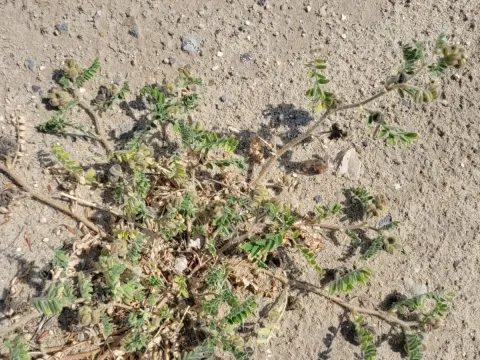
Astragalus contortuplicatus
Astragalus contortuplicatus
Astragalus contortuplicatus is an annual herbaceous plant belonging to the Fabaceae family, recognized for its role in sustainable nitrogen fixation within agricultural systems.
What the section contains
Astragalus contortuplicatus
The sowing season typically begins in early spring, once the soil has reached an adequate temperature to trigger seed germination and emergence.
Due to the physical dormancy of the seeds, scarification is a crucial pre-sowing treatment that ensures uniform crop density across the field.
Seeds are sown at a shallow depth of approximately 2-3 cm, which is optimal for balancing moisture retention and the energy required for seedling establishment.
Strategic planting dates are essential for matching the crop's vegetative stage with the local moisture availability, ensuring a robust harvest potential.
This species thrives in arid and semi-arid environments, demonstrating high resilience to drought conditions that would typically stress other legume species.
The preferred soil types for Astragalus contortuplicatus are well-drained, fertile loams or sandy soils that prevent waterlogging and promote deep root development.
While the plant is hardy, it requires adequate sun exposure to maximize photosynthetic efficiency and overall biomass production throughout the growing season.
Soil pH should ideally remain in the neutral range, as the plant exhibits moderate tolerance to alkalinity but may struggle in highly acidic environments.
Nutrient management focuses on moderate phosphorus applications, which support root health and symbiosis with nitrogen-fixing bacteria residing in root nodules.
Weevil populations represent a significant threat to the crop, as they feed on both vegetative parts and developing seeds, potentially impacting yield quality.
Fungal pathogens such as powdery mildew can compromise the health of the plant during periods of high humidity or poor canopy ventilation.
Integrated pest management strategies are recommended, emphasizing the use of resistant varieties and crop rotation to break the cycle of host-specific pests.
Maintaining proper field hygiene, including the removal of infected debris after harvest, is vital to reducing inoculum levels for subsequent seasons.
Chemical intervention should be reserved for periods of peak infestation, utilizing targeted applications to protect beneficial insects while controlling the target pests.