
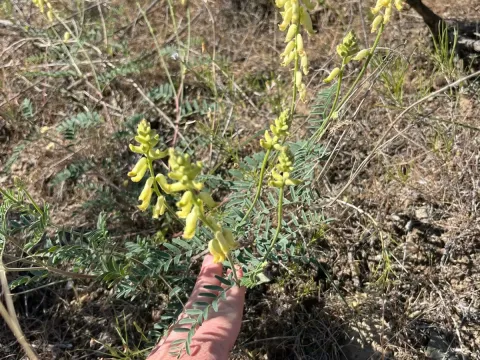
Astragalus collinus
Astragalus collinus
Astragalus collinus is a perennial leguminous plant known for its hardiness and adaptability. Sowing is typically conducted in early spring as soon as the soil is workable, allowing for optimal moisture utilization.
What the section contains
Astragalus collinus
Seeds of this species exhibit physical dormancy due to a hard seed coat. Scarification is an essential pre-sowing treatment that significantly increases germination rates and ensures uniform crop establishment.
The recommended seeding depth is shallow, ranging between 1 to 2 centimeters. Proper soil contact is critical, and light packing or rolling after sowing improves the uniformity of emerging seedlings.
Growth is slow during the first year as the plant invests energy into developing a deep taproot system. Weed management is particularly important during this establishment phase to minimize competition.
Once established, Astragalus collinus is a robust perennial that can remain productive for over a decade. It creates a dense cover that effectively suppresses invasive weeds and stabilizes soil against erosion.
This species is well-adapted to arid and semi-arid environments. It thrives in full sunlight and prefers well-drained, sandy, or stony soils that are typical of its natural hillside habitat.
The plant demonstrates excellent drought tolerance, outperforming many other legumes in water-limited conditions. It is intolerant of waterlogged soils, which can lead to root decay and stand thinning.
Astragalus collinus prefers a neutral to slightly alkaline pH level. It is highly efficient at establishing nitrogen-fixing nodules in low-fertility soils, reducing the need for chemical fertilizers.
Temperature range tolerance is broad, as the plant withstands both extreme summer heat and severe winter frost. Its deep root system allows it to access soil moisture and nutrients deeper in the profile.
In a field setting, minimal mineral input is required if the soil contains basic levels of phosphorus and potassium. Periodic soil testing ensures that these levels remain adequate for long-term productivity.
Forage yield for Astragalus collinus is moderate but highly stable across seasons. In productive environments, dry matter yield ranges from 3 to 5 tons per hectare, providing reliable livestock feed.
The nutritional profile is comparable to alfalfa, offering high protein content, which is beneficial for livestock growth and milk production. It serves as an excellent component for permanent pasture mixtures.
The plant is an exceptional honey source, particularly in late summer when other nectar sources are scarce. Its ability to produce nectar under drought conditions makes it a favorite for beekeepers.
Seed production is highly dependent on climate and pollinator availability. Harvesting seed requires careful monitoring of pod maturity to prevent shatter loss due to the plant's natural dehiscence.
Grazing potential is high, as the plant exhibits quick recovery after defoliation. Its resilience makes it suitable for rotational grazing systems, provided that overgrazing is avoided.
Common diseases affecting this crop include powdery mildew and various leaf spot fungal pathogens. These are most prevalent in high-humidity conditions or areas with poor air circulation.
Insect pests, such as weevils, can pose a risk to both leaf tissue and roots. Seed-feeding insects may also damage pods, which negatively impacts the potential for harvesting clean seed lots.
Nematode infestations can occur in sandy soils, leading to stunted plant growth and reduced vigor. Crop rotation and maintaining healthy soil microbial activity are key components of integrated control.
Management strategies emphasize prevention and cultural control. Avoiding over-fertilization and ensuring proper stand density help create a robust crop less susceptible to biotic pressures.
Chemical intervention should be considered only when economic thresholds are exceeded. Selective and timely application is necessary to protect the beneficial pollinator population that relies on the plant.
The optimal harvest time for hay is the early flowering stage, which ensures the best balance between biomass volume and nutritional concentration. Late harvesting leads to high stem-to-leaf ratios.
Hay curing should be performed with minimal handling to prevent leaf loss. Proper windrow management allows for even drying, maintaining the color and quality of the final product.
For seed harvesting, a two-stage process is usually preferred. Swathing the crop when pods turn brown allows the seed to reach physiological maturity before final threshing occurs.
Seed cleaning requires specialized equipment due to the hardness and small size of the seeds. Proper storage in cool, dry conditions maintains viability for several years.
Maintenance after the final harvest is simple: the stand should be allowed to build up root reserves before the onset of winter dormancy. Fall grazing or mowing is generally not recommended.