
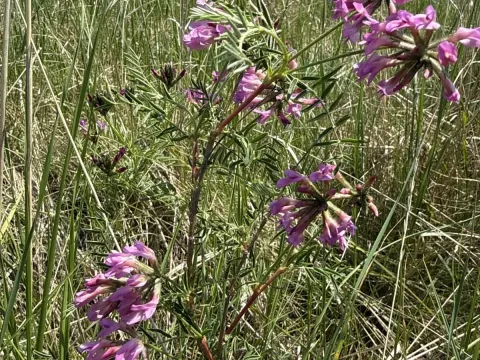
Astragalus cornutus
Astragalus cornutus
Astragalus cornutus is a perennial herbaceous plant belonging to the Fabaceae family. Sowing is typically carried out in early spring as soon as the soil warms up to 5-8 degrees Celsius, which ensures optimal utilization of soil moisture after snowmelt.
What the section contains
Astragalus cornutus
The seeds of this crop are characterized by high dormancy due to a hard seed coat, so scarification is recommended before sowing to increase germination rates. Seeding is performed in rows with inter-row spacing of 15 to 30 centimeters depending on the cultivation goals.
The depth of sowing should be between 2 and 3 centimeters. Deeper sowing may result in weakened seedlings or failure to emerge due to the exhaustion of energy reserves within the seed.
The seeding rate varies depending on seed quality and soil fertility, averaging between 8 and 12 kilograms per hectare of land.
After completing the sowing process, rolling the soil is an essential agricultural practice to ensure close contact between seeds and soil moisture, which significantly accelerates the germination process.
The crop has moderate climatic requirements, demonstrating high winter hardiness and the ability to withstand short periods of drought during the summer months.
It prefers open, well-lit areas. In shaded conditions, the plant's development slows down significantly, leading to a decrease in both green biomass and reproductive capacity.
The plant is not particularly demanding regarding soil fertility, but it performs best on light loamy and sandy soils with a neutral or slightly alkaline reaction.
Placement on heavy clay soils with waterlogging is highly undesirable, as this promotes root rot and inhibits the development of nitrogen-fixing bacteria on the root system.
The plant successfully forms a symbiosis with nodule bacteria, allowing it to thrive even in low-nitrogen soil environments.
The green biomass yield of Astragalus cornutus depends on the intensity of use and the agricultural background, averaging 150-250 centners per hectare per season under regular irrigation.
When harvesting for hay, the yield of dry matter usually accounts for about 30-40 percent of the total green biomass, while maintaining high nutritional value.
Maximum productivity levels are achieved in the second and third year of the crop's life, when the root system reaches full development and deep penetration into the soil profile.
The protein accumulation level in the vegetative mass is quite high, making the plant a valuable component for establishing cultivated hayfields and improving grazing lands.
With systematic application of phosphorus and potassium fertilizers, significant yield increases and extended product longevity of up to 5-7 years can be achieved.
The main threats to the crop are fungal diseases that develop under high humidity conditions, such as powdery mildew and various types of leaf rust.
Among pests, weevils are the most common, damaging reproductive organs and reducing seed yield, as well as nodule weevils that feed on leaf margins.
To prevent the spread of infections, it is recommended to strictly follow crop rotation and avoid overcrowding in fields, thereby ensuring good plant aeration.
In case of massive pest infestations, biological control methods or approved insecticides are applied during periods that do not coincide with active flowering.
Disease prevention also includes the use of high-quality treated seed material and timely removal of weeds, which act as reservoirs for many pathogens.
Harvesting for hay is carried out at the beginning of the flowering phase, when the concentration of nutrients in stems and leaves reaches its maximum value for forage purposes.
For seed production, harvesting is performed when the majority of pods turn brown, avoiding over-ripening to prevent seed shattering directly in the field.
Mowing the green mass should be done at a height of 5-7 centimeters from the soil surface to ensure rapid regrowth and the preservation of the crown.
After mowing, the mass is left in swaths for wilting, followed by baling or collection for further drying under stationary conditions to a moisture level of 15-17 percent.
Collected seeds require cleaning from impurities and drying to a moisture content of no more than 12-13 percent to ensure long-term storage in warehouse facilities.