
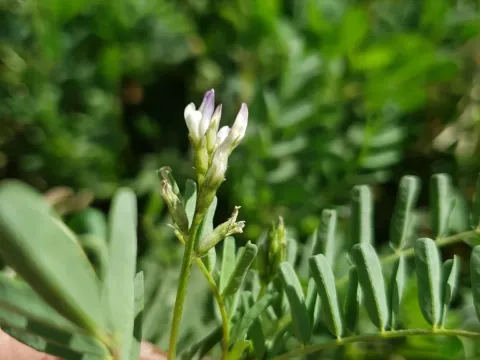
Astragalus crenatus
Astragalus crenatus
Astragalus crenatus belongs to the Fabaceae family and is a perennial plant known for its adaptation to various environmental conditions. This species is often studied for its potential in sustainable agriculture and soil improvement.
What the section contains
Astragalus crenatus
The seeds of this species have a hard seed coat, which necessitates scarification to achieve uniform germination. Without this pre-sowing treatment, germination rates in the field may be significantly lower due to seed dormancy.
Sowing should take place in early spring once the soil temperature is suitable for biological activity. Planting depths should be kept shallow, typically around 2 to 3 centimeters, to allow for optimal seedling emergence.
The seeding rate depends on the intended density of the stand, usually ranging from 10 to 15 kg per hectare. Row spacing should be adjusted to allow for mechanical weeding during the early stages of growth.
During the first growing season, the plant establishes its root system. Therefore, weed control is critical during this period, as the crop is initially slow-growing and can be easily outcompeted by aggressive weeds.
This crop is highly valued for its drought tolerance. It is well-suited for regions with irregular rainfall, as its deep root system allows it to extract moisture from deeper soil layers during dry spells.
Well-drained soils are essential for the health of Astragalus crenatus. It does not perform well in waterlogged or heavy clay soils, as these conditions increase the risk of root rot and other physiological disorders.
As a nitrogen-fixing legume, the plant develops a symbiotic relationship with Rhizobium bacteria. This process enhances soil fertility by converting atmospheric nitrogen into a form accessible to other plants in the rotation.
The soil pH should be maintained in the neutral to slightly alkaline range. Soil testing before planting is recommended to determine if any amendments, such as lime, are necessary to optimize the growing environment.
Optimal growth requires full sun exposure. While the plant can tolerate some light shade, maximum biomass production and seed set are achieved under high-intensity light conditions.
The primary agricultural use of Astragalus crenatus is as a forage crop. It provides high-quality green biomass that is rich in proteins and essential minerals for livestock feed.
Yields can be maximized through balanced fertilization, focusing on phosphorus and potassium levels, which support strong root development and plant longevity throughout the growing cycles.
Beyond its forage value, the species is an effective phytoremediation tool. It is often planted to stabilize soil on slopes and prevent erosion in degraded landscapes or fallow agricultural fields.
Seed production is another vital aspect of its cultivation. Successful seed yields require specific management practices, such as ensuring adequate pollination and preventing over-ripening of the seed pods.
Consistent biomass production allows for multiple harvests per season in favorable climates, making it a reliable choice for farmers looking to maintain soil health while producing feed.
Pest management is focused on controlling insects that target pods and foliage, such as weevils or aphids. Integrated Pest Management (IPM) strategies are recommended to minimize chemical usage.
Fungal diseases like rust and various leaf spot pathogens can occur during humid growing conditions. Good field hygiene and proper spacing help to reduce the risk of widespread infections.
Crop rotation is the most effective cultural practice to prevent the buildup of soil-borne pathogens. A gap of several years between growing Astragalus on the same site is recommended.
Vigilant field monitoring is necessary to detect early signs of pest or disease pressure, allowing for timely intervention before significant economic damage occurs to the crop.
Maintaining strong plant health through proper fertilization and weed control acts as a natural defense mechanism against many common agricultural pests and diseases.
Harvesting for forage should occur during the full bloom phase. This timing ensures the highest nutritional density before the plant diverts its energy resources into seed development.
When harvesting, the height of the cut is crucial to preserve the plant's crown. Leaving enough vegetative stubble promotes faster regrowth and improves the resilience of the stand for future harvests.
Drying the green matter to a moisture content of roughly 15% is essential for safe storage. Improperly dried hay is prone to mold and a significant decline in nutritional quality.
Seed harvesting should be performed when the pods turn dark and brittle. To prevent shattering losses, farmers often use direct combining or windrowing followed by threshing.
Cleaned seeds should be stored in cool, dry conditions. Proper storage prevents germination loss and ensures high-quality planting material for the next agricultural cycle.