
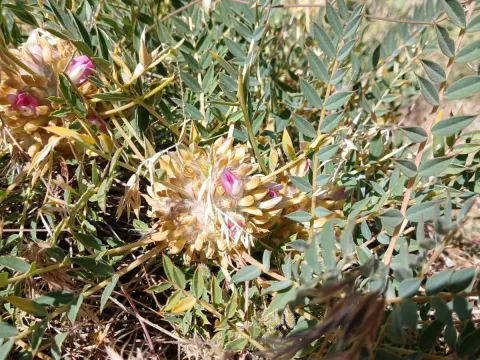
Astragalus deinacanthus
Astragalus deinacanthus
Astragalus deinacanthus is a perennial herbaceous plant belonging to the Fabaceae family. It is a rare, endemic species native to the rocky, arid landscapes of Eastern Anatolia in Turkey, where it has evolved to thrive in high-altitude, extreme environmental conditions.
What the section contains
Astragalus deinacanthus
Botanically, it is classified as a spiny cushion-forming subshrub. The plant features a deep, well-developed root system designed to extract moisture from rocky crevices, while the densely arranged spines protect the foliage from browsing animals in its resource-scarce habitat.
The environmental requirements for this species are strict. It demands high levels of solar radiation and is highly tolerant of drought. The ideal soil type is a well-drained, porous, and lime-rich substrate, as the plant cannot tolerate any form of waterlogging or anaerobic soil conditions.
Climatically, it is adapted to significant temperature fluctuations between day and night. It thrives in regions with hot, dry summers and cold, arid winters, making it an excellent candidate for xeriscaping or research into drought-resistant agricultural plant models.
Cultivation protocols require minimal soil disturbance and careful management of water. Due to its adaptation to nutrient-poor soils, the application of high-nitrogen fertilizers is generally counterproductive, as it disrupts the plant's natural mycorrhizal relationships.
The primary threats to Astragalus deinacanthus are the loss of its natural habitat and overgrazing. Because of its restricted endemic range, even minor ecological disturbances in its natural environment can lead to a significant decline in the population density.
Regarding agricultural pathogens, the species is susceptible to root rot, particularly in cultivation settings where humidity is not strictly controlled. Excessive soil moisture triggers the rapid spread of pathogenic fungi that degrade the sensitive root collar of the plant.
Insect pests such as seed-feeding beetles represent a significant threat to its propagation. These insects can devastate seed production cycles, which is a major constraint when attempting to multiply the species for conservation or agricultural research purposes.
Nematodes are another potential hazard, especially when plants are introduced to non-native soils. Proper soil testing and sterilization prior to planting are recommended to protect the root health of this rare and valuable botanical specimen.
Conservation and disease management strategies prioritize integrated pest management. Avoiding harsh chemical inputs is critical, as the plant's delicate metabolic pathways are highly sensitive to synthetic herbicides and fungicides typically used in commercial farming.