
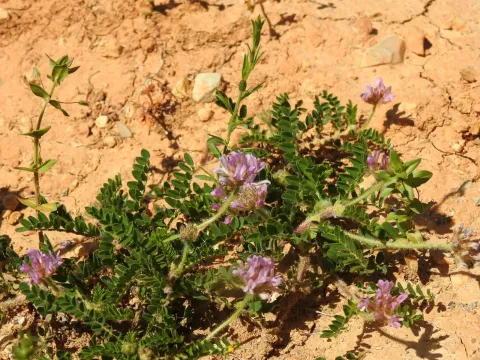
Astragalus echinatus
Astragalus echinatus
Astragalus echinatus is a perennial legume known for its exceptional adaptation to harsh environments. It plays a significant role in ecological restoration and sustainable forage production.
What the section contains
Astragalus echinatus
The sowing period is primarily set for early spring to ensure the seeds benefit from melting snow or early rains. Proper moisture availability at the germination stage is crucial for establishing a healthy crop.
Seeds require scarification to break dormancy and ensure uniform germination across the field. This mechanical or chemical process is a vital step in successful legume establishment.
The optimal seeding depth is shallow, ranging between 2 and 3 centimeters. Precise depth control prevents seedling exhaustion before reaching the surface and optimizes the density of the initial stand.
The sowing rate should be determined based on the target stand density. As the crop grows, it spreads effectively, covering the soil surface and suppressing weed competition through its robust root system.
Light intensity is a critical requirement for this species. Astragalus echinatus thrives under full sunlight, as shade negatively impacts its photosynthetic efficiency and overall growth rate.
The soil should have excellent drainage, as the plant is highly sensitive to waterlogging. It performs exceptionally well in sandy, rocky, or calcareous soils where other forage crops might fail.
Climate adaptability is one of its strongest attributes. The plant is drought-tolerant, making it an ideal choice for arid or semi-arid regions where rainfall is erratic and unreliable.
Temperature tolerance ranges from moderate cool seasons to intense summer heat. The deep taproot allows the plant to stay green even during peak summer months by accessing subsoil water.
Fertilization requirements are low. The legume naturally fixes nitrogen, reducing the need for synthetic nitrogenous fertilizers and lowering overall input costs for producers.
Insect pests, particularly weevils, can affect root health and plant vigor. Integrated pest management strategies are recommended to maintain field health without excessive chemical use.
Defoliating insects can be problematic during the rapid growth stage. Monitoring is essential to ensure damage does not exceed the economic threshold, especially in high-density forage stands.
Fungal diseases like powdery mildew can arise during high-humidity periods. Proper field spacing is essential to ensure airflow and reduce the incidence of moisture-related plant pathogens.
Root rot is the most common disease associated with poor soil drainage. Choosing the right site with superior natural drainage is the most effective long-term preventative measure.
Crop rotation protocols should be strictly followed to prevent the buildup of soil-borne diseases. Avoiding repeated planting on the same site for several years helps maintain soil health.