
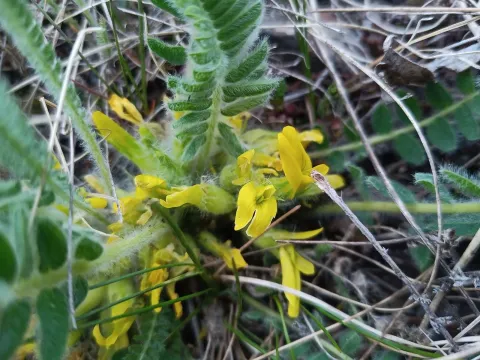
Astragalus exscapus
Astragalus exscapus
Astragalus exscapus, commonly known as stemless milkvetch, belongs to the Fabaceae family. It is a perennial herbaceous plant characterized by its stemless appearance, where leaves and flowers emerge from the crown at ground level.
What the section contains
Astragalus exscapus
Sowing should ideally occur in early spring after the soil has warmed, or during the autumn season. The seeds possess a hard seed coat, necessitating scarification techniques to break dormancy and ensure uniform germination.
The optimal planting depth is approximately 1.5–2 cm. Proper seedbed preparation is vital, as the seedlings are sensitive to competition and require clear space to establish their root systems during the initial growth stages.
Seeding rates and row spacing depend on the intended use, whether for seed production or ecological restoration. Spacing of 45–60 cm between rows is recommended to allow for easy mechanical weeding during the establishment phase.
The plant devotes significant energy to deep root development in the first year, resulting in slow initial growth above ground, which growers must account for when planning field management.
This species thrives in sunny environments with well-drained, lime-rich, or rocky soils. It is highly intolerant of waterlogged conditions and poorly drained heavy clays, which often lead to crown rot.
It is remarkably drought-tolerant once established, thanks to its deep taproot system. This trait makes it suitable for regions with limited rainfall or semi-arid climates where other forage crops might fail.
Cultural practices should focus on maintaining weed-free rows, especially during the first two seasons. Regular hoeing or cultivation helps aerate the soil and prevents competition for vital nutrients.
While the plant can fix atmospheric nitrogen through symbiosis, a modest application of phosphorus and potassium fertilizer can enhance plant vigor and promote better flowering and seed set.
The plant is an excellent candidate for stabilizing slopes and preventing soil erosion, making it useful in land reclamation and conservation agriculture projects.
Fungal pathogens such as powdery mildew represent a significant threat in areas with high humidity. Proper airflow through the canopy is essential to mitigate these risks.
Various beetles and weevils may target the vegetative parts or developing seeds. Integrated pest management strategies are advised to keep populations below economic damage thresholds.
Rotating crops and avoiding the planting of other leguminous species in adjacent fields can reduce the build-up of specialized soil-borne pests and diseases.
Early detection of infestation is critical. Scouting during the growing season allows for targeted interventions rather than blanket chemical applications, preserving the ecological balance.
Careful field sanitation, including the removal of infected plant debris, helps lower the primary inoculum load for subsequent years.
Seed harvest must be timed precisely to capture the crop at maturity. Because of its low-growing habit, specialized headers designed for low-clearance crops are required to minimize yield loss.
For medicinal or phytochemical use, the above-ground biomass should be harvested during peak flowering. This ensures the highest concentration of secondary metabolites, such as flavonoids and saponins.
Drying the harvested material should occur in a well-ventilated space at controlled temperatures. Avoiding direct sunlight during the drying process helps preserve the quality of the phytochemicals.
Storage requires cool, dry, and dark conditions to prevent spoilage and degradation of active compounds over time. Packaging should be breathable to prevent moisture accumulation.
With proper management, a plantation can remain productive for several years, providing consistent yields and contributing to long-term soil health and biodiversity.