
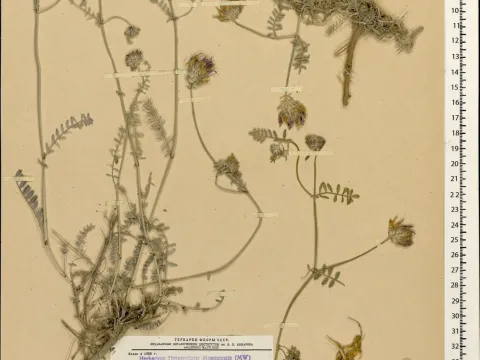
Astragalus cancellatus
Astragalus cancellatus
Astragalus cancellatus is a perennial herbaceous plant belonging to the Fabaceae family. Known for its remarkable resilience, it is increasingly studied for its potential as a forage crop in regions suffering from water scarcity and soil degradation.
What the section contains
Astragalus cancellatus
The plant originates from the arid and semi-arid regions of Eurasia. Its botanical structure is optimized for survival in harsh conditions, featuring deep taproots that anchor the plant and allow access to moisture unavailable to shallower-rooted species.
The leaves of this species are often pubescent, which serves as a physiological adaptation to reduce water loss. This feature, combined with its ability to grow in nutrient-poor soils, makes it a candidate for rehabilitating degraded steppes and dry pastures.
For successful cultivation, Astragalus cancellatus requires well-drained soil and high levels of sunlight. It is sensitive to soil acidity and waterlogging, making light, loamy, or sandy soils the most suitable for establishment and long-term development.
Beyond its value as forage, it acts as a nitrogen fixer. By forming symbiotic relationships with soil bacteria, the plant enhances soil fertility, creating favorable conditions for subsequent crops in a rotation system.
Sowing should take place in early spring as soon as the soil reaches workable temperatures. Planting during this window allows the plants to establish a robust root system before the onset of the intense heat typical of summer months.
Site preparation requires thorough plowing and leveling of the seedbed. Because the seeds possess a hard, impermeable seed coat, mechanical scarification is highly recommended to improve germination rates and ensure a uniform stand.
Seeding rates typically range from 10 to 12 kg per hectare depending on the method used. Rows should be spaced 20–30 cm apart to allow for proper development of the plants and to facilitate mechanical weeding if necessary during the first season.
Seeds should be placed at a shallow depth of 2 to 3 cm. Deep planting is discouraged as it often results in poor emergence. Post-sowing rolling of the field is standard practice to ensure seed-to-soil contact and promote better capillary moisture movement.
Growth in the first year is slow, as the plant prioritizes building its root system over foliage production. Monitoring and controlling weed competition during this early development stage is crucial for ensuring the survival of the seedlings.
Astragalus cancellatus is generally hardy, but it can be susceptible to powdery mildew under conditions of high humidity or poor air circulation. Proper field spacing and site selection help mitigate these fungal risks.
Insect pests, including aphids and various seed-feeding weevils, represent the primary threat to both vegetative and reproductive stages. Regular scouting during the flowering period is recommended to determine if intervention is needed.
Root rots may occur if the soil is kept excessively wet. Therefore, ensuring adequate field drainage is the most effective preventative measure against soil-borne pathogens that target the root crown.
Preventative crop rotation is vital to disrupt the life cycles of pests and pathogens specific to legumes. Avoiding planting on land previously used for other susceptible legume species will significantly lower the incidence of common diseases.
As an under-researched crop, maintaining genetic diversity and ensuring seeds are sourced from healthy, robust populations is important to minimize vulnerability to localized stress factors or outbreaks.