
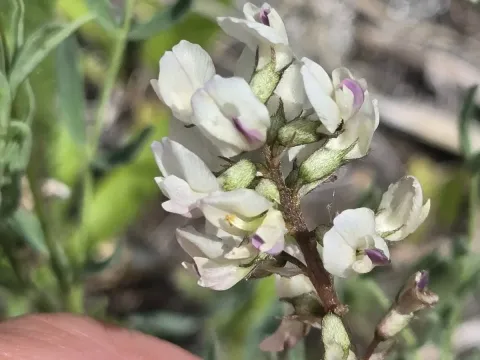
Astragalus australis
Astragalus australis
Astragalus australis is a perennial legume that requires careful planning regarding the timing of sowing. Early spring is generally considered the optimal period, allowing the seedlings to establish a strong root system before the onset of summer heat.
What the section contains
Astragalus australis
Dormant or late autumn sowing is also a viable option in many regions, as it naturally stratifies the seeds. This often results in more vigorous and uniform germination once the ground warms up in the following season.
Seed scarification is a crucial step for this species due to the hard seed coat, which can inhibit water absorption. Mechanical or chemical scarification methods are recommended to improve the germination rate significantly.
Sowing depth should be kept shallow, typically between 1.5 and 2.5 centimeters. A firm seedbed is essential to ensure adequate moisture contact, which is vital for the survival of the young plantlets during the establishment phase.
The seeding rate varies based on the intended use of the crop, whether as a pure stand or part of a pasture mixture. Proper spacing between rows is maintained to facilitate future field maintenance and harvesting operations.
This plant thrives in sunny, well-lit environments and shows excellent cold tolerance, making it suitable for temperate and northern latitudes. It prefers soils with good structure and sufficient drainage to avoid waterlogging.
Soil pH levels should ideally be neutral or slightly alkaline for optimal growth. Astragalus australis performs best on loamy or sandy loam soils, where its roots can penetrate deeply to tap into groundwater reserves.
One of the most valuable traits of this species is its drought resistance, largely due to its deep taproot system. It is an excellent choice for areas with unpredictable rainfall patterns where more sensitive crops might fail.
The plant forms a symbiotic relationship with nitrogen-fixing bacteria, contributing to soil health by enriching it with nitrogen. This natural fertilizing process reduces the need for synthetic inputs over time.
While the plant is hardy, it benefits from balanced applications of potassium and phosphorus to support winter survival and vigorous regrowth. Excessive nitrogen fertilization is usually unnecessary and can be counterproductive.
Yield capacity of Astragalus australis tends to peak after the second year, once the plant has fully established its extensive root biomass. In the first year, energy is primarily directed towards root development rather than above-ground foliage.
Under favorable conditions, two harvests per season are possible. The first harvest should be timed at the onset of flowering to ensure the best balance between biomass quantity and nutritional density.
The crop's productivity is highly dependent on the mowing regime. Regular, strategic harvesting encourages branching and the development of new growth, which helps maintain the stand for many years.
As a forage source, the plant is highly palatable to various livestock, including sheep and cattle. Its nutritional profile, particularly its protein content, makes it a valuable alternative to traditional clover or alfalfa.
Late-season grazing or harvesting should be managed carefully to ensure enough plant reserves remain for winter survival. Failing to allow this recovery period can significantly weaken the stand for the following year.
Like many leguminous plants, Astragalus australis is susceptible to root rot, especially in poorly drained soils. Management strategies should prioritize maintaining proper soil aeration and avoiding excessive humidity.
Insects such as weevils can pose a threat to the crop, particularly at the seedling stage or during the seed development phase. Regular monitoring is necessary to determine if intervention is required to prevent economic damage.
Crop rotation remains the most effective defense against soil-borne diseases. Avoiding back-to-back cultivation on the same plot for at least five years is a recommended agronomic practice.
Powdery mildew may occur during particularly wet and warm periods, potentially reducing leaf quality. Improving air circulation by not over-densifying the stands is a simple yet effective preventative measure.
Integrated pest management, combining cultural practices with biological controls, is preferred over chemical solutions. Keeping the stand healthy through proper fertilization and mowing is the best way to maintain plant vigor.
Harvesting for hay must occur before the pods become too lignified to ensure the material remains palatable and nutritious. Timing the harvest during the early flowering phase is standard practice for high-quality feed.
Drying the harvested material requires care; excessive exposure to intense sun can lead to leaf loss and loss of nutrients. Turning the windrows periodically ensures even moisture reduction and preserves color.
Seed production harvesting requires careful adjustment of combine settings to handle the delicate pods properly. Seed is harvested when the majority of pods have turned brown but before shattering begins.
Post-harvest processing involves cleaning and drying the seeds to a safe moisture content of around 12%. Proper storage in ventilated, cool conditions is critical to maintaining high viability for future seasons.
Leftover residue following seed harvest can often be repurposed as secondary forage. This strategy optimizes the utilization of the crop, providing both a seed yield and additional grazing material for livestock.