
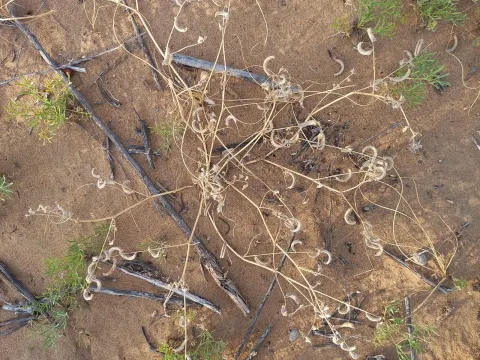
Astragalus arpilobus
Astragalus arpilobus
Astragalus arpilobus is a perennial herbaceous plant belonging to the diverse Fabaceae family. Known for its adaptation to arid and semi-arid environments, this species is gaining attention for its potential use in low-input agricultural systems, particularly in areas where water availability is a limiting factor.
What the section contains
Astragalus arpilobus
Originating from regions with steppe or semi-desert climates, the plant exhibits remarkable physiological resilience. It is highly tolerant to heat and drought, thanks to a deep-reaching taproot system that explores lower soil layers to access moisture even during prolonged dry spells.
The soil requirements for Astragalus arpilobus are generally moderate. It thrives in well-drained sandy or loamy soils with good aeration. Like other legumes, it benefits from the presence of symbiotic nitrogen-fixing bacteria, which allow it to enrich the soil with nitrogen, improving fertility for subsequent crops.
Climate adaptability is a hallmark of this species, as it is capable of withstanding significant temperature fluctuations and survives the harsh winters of its native habitat. It prefers full sunlight, which is necessary for vigorous growth and successful seed production during the vegetative season.
In agricultural practice, this plant is primarily valued as a forage source. Its high protein content and balanced nutritional profile make it a sustainable option for improving pasture productivity in dryland farming areas where traditional forage crops might fail to thrive.
The optimal timing for sowing Astragalus arpilobus is typically early spring. This allows the seeds to benefit from residual soil moisture, which is crucial for uniform germination and establishment before the onset of the summer heat.
Seed preparation is a vital step in the establishment process. Due to the hard seed coat, scarification is often required to break dormancy and ensure efficient water uptake. Without this step, germination rates can be low and uneven across the field.
Sowing depth should be managed carefully, with an ideal depth of 1.5 to 2 centimeters. Planting too deep can lead to the exhaustion of energy reserves in the emerging seedling, while planting too shallow may expose seeds to dehydration or bird predation.
During the first year of establishment, the plant allocates most of its energy to developing its root system. Therefore, growth above ground may appear slow. It is essential to manage weed competition during this phase to ensure that seedlings have sufficient access to sunlight and nutrients.
Row spacing should be calibrated based on the specific end-use. Wider spacing is generally preferred for seed production to facilitate aeration and reduce the risk of humidity-related pathogens, whereas narrower spacing is common when the crop is intended for biomass production.
Pathogenic fungi, such as powdery mildew and various rusts, are the most frequent threats to the health of Astragalus arpilobus. These issues are exacerbated in areas with poor ventilation and high humidity, making site selection and row spacing essential management tools.
Pests, particularly weevils, pose a risk to seed development by damaging the pods and flowers. In some regions, aphid infestations may also occur during the active growth phase, which can weaken the plants and increase their susceptibility to viral infections.
A sound crop rotation strategy is the primary defense against soil-borne pathogens. Avoiding the planting of Astragalus on fields where other legumes were recently grown helps to disrupt the life cycle of specialized pests and soil-dwelling diseases.
Integrated pest management (IPM) practices, including the use of pheromone traps and beneficial predator insects, are recommended to maintain low pest populations. Chemical interventions should be used sparingly and only as a last resort to protect the ecosystem.
Ongoing monitoring of the crop canopy is necessary to catch infestations or disease outbreaks in their early stages. Early detection allows for localized treatments, which are much more cost-effective and environmentally friendly than broad-spectrum applications.