
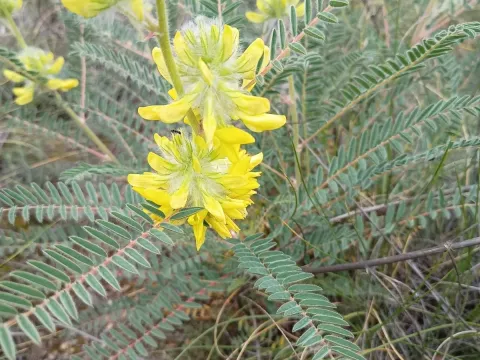
Astragalus alopecuroides
Astragalus alopecuroides
Astragalus alopecuroides is a perennial legume that requires careful field preparation before planting. Sowing is typically conducted in early spring, allowing the seeds to benefit from adequate moisture levels for root development during the initial growth phase.
What the section contains
Astragalus alopecuroides
To improve germination rates, seeds should undergo mechanical scarification, as they possess a tough coat. Sowing depth should be kept between 1.5 to 2.5 centimeters in well-pulverized soil to ensure successful emergence.
Maintaining optimal plant density is crucial to reduce competition for light and water. The recommended planting method is row seeding, with spacing of 15–30 centimeters, depending on the local environmental conditions and equipment.
Autumn sowing is generally discouraged in regions with severe winters and lack of stable snow cover. Spring sowing remains the most reliable method for establishing a strong, resilient stand capable of surviving its first winter.
After seeding, rolling the field is highly recommended to ensure proper seed-to-soil contact. This practice promotes uniform germination and significantly increases the survival rate of young seedlings during the first few weeks of growth.
This crop is highly drought-tolerant and well-adapted to harsh environmental conditions. It thrives in steppe and forest-steppe zones where other forage grasses often fail due to water scarcity.
The soil should be well-drained, as Astragalus alopecuroides does not tolerate waterlogging. It performs best on carbonate-rich chernozem or sandy loam soils that provide good aeration for the root system.
The plant is capable of fixing atmospheric nitrogen through symbiosis with nodule bacteria, which reduces the need for synthetic nitrogen fertilizers. This makes it an environmentally friendly and cost-effective crop for sustainable agriculture.
High light exposure is essential for biomass production. In shaded or overcrowded fields, the rate of photosynthesis decreases, which negatively affects the quality and volume of the harvested hay.
Featuring a robust taproot system that reaches deep into the subsoil, the plant can effectively access groundwater. This durability makes it a reliable component of perennial crop rotations in areas prone to drought.
Forage yield is a primary factor in the agricultural value of Astragalus alopecuroides. With proper management, the crop produces high, consistent yields starting from the second year of its life cycle.
When utilized for hay production, the crop provides high-quality feed rich in protein. Harvesting is typically conducted twice per season, aligning with the periods of most active plant growth.
Productivity also depends heavily on the choice of the preceding crop. Fields previously used for row crops, which leave the ground free of stubborn weeds, provide the best conditions for a new stand.
The regrowth capability of the plant allows for moderate livestock grazing in the autumn. However, caution must be exercised to avoid overgrazing, which could damage the crown of the plants and affect yield in subsequent years.
Seed production is consistent enough to allow farms to maintain their own supply for reseeding. Proper harvest management can result in a sufficient seed yield to support expanded planting operations.
Root rot is one of the primary threats to the crop, typically triggered by excessive moisture or poor field drainage. It can lead to rapid decline and mortality across large areas within a single season.
Insect pests, such as weevils, often damage leaves and reproductive organs. Control strategies focus on prevention, including maintaining spatial isolation from wild legume species that serve as alternate hosts.
Powdery mildew often attacks stands during the second half of the summer. The visible white coating on leaves hinders metabolic processes and can cause premature leaf drop if not managed correctly.
While biological and chemical pesticides are available, their use is restricted during the flowering period to protect bees and other essential pollinators that ensure successful seed development.
Regular field monitoring is vital for early detection of disease outbreaks. Keeping the field free of invasive weeds also minimizes the niches where pests and pathogens can thrive throughout the year.
The timing of hay harvest must be precisely calibrated to the budding phase. This is when the nutritional value of the green mass is at its peak, providing optimal protein levels for livestock.
For seed harvesting, timing is determined by the color of the pods. Early signs of browning indicate that the pods are ready for harvesting. Delaying the process can lead to significant losses due to seed shattering.
Drying the harvested material should happen as quickly as possible. Using specialized mower-conditioners allows for uniform drying, preventing mold growth and maintaining the vitamin content of the hay.
During the threshing process, combine settings must be carefully adjusted to prevent mechanical damage to the seeds. High-quality threshing is essential for maintaining germination viability for future plantings.
Once harvested, the seeds must be thoroughly cleaned of plant debris and dust. Proper storage in dry, well-ventilated conditions with a controlled temperature is necessary to ensure long-term seed longevity.