
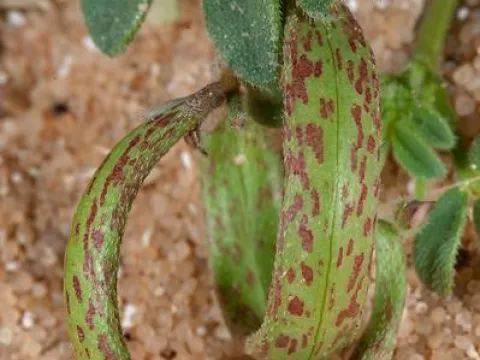
Astragalus annularis
Astragalus annularis
Astragalus annularis is an annual herbaceous plant belonging to the Fabaceae family. It is native to the arid desert and semi-desert regions of North Africa and the Middle East, where it has evolved to thrive in harsh environments.
What the section contains
Astragalus annularis
The plant possesses a highly efficient root system that enables it to extract moisture from deep within sandy or rocky soils. As a true xerophyte, it demonstrates remarkable resilience to prolonged periods of drought and extreme thermal fluctuations.
To ensure healthy growth, the plant requires maximum solar exposure and well-drained soil. It is particularly well-adapted to environments with low organic matter, where it contributes to soil nitrogen enrichment through symbiotic relationships with bacteria.
Botanically, it is characterized by its distinctive curved or ring-shaped pods, which protect the seeds until conditions are favorable for germination. The foliage is often pubescent, serving as a thermal insulation layer against the scorching desert heat.
In terms of land use, Astragalus annularis serves as an important stabilizing agent for shifting sands in desert landscapes. It also functions as a vital nutritional resource for grazing livestock, particularly in areas where other forage crops cannot survive.
The primary threats to this species are predominantly climatic, with severe and unpredictable rainfall patterns being the most significant factor affecting its biological cycle.
Fungal infections can occasionally arise during unseasonable periods of high humidity, potentially leading to root or crown rot, which is detrimental to the plant's development.
Various insect pests, common to legume crops, may target the pods and seeds. These pests can significantly reduce the viability of the seed bank and hinder the natural regeneration of the plant population.
Intense competition from other desert ephemerals during the short growing season can reduce the overall density and vigor of Astragalus annularis stands.
Overgrazing by nomadic herds poses a substantial threat, as it prevents the plants from reaching the seed-setting stage, thereby endangering future generations of the population.