
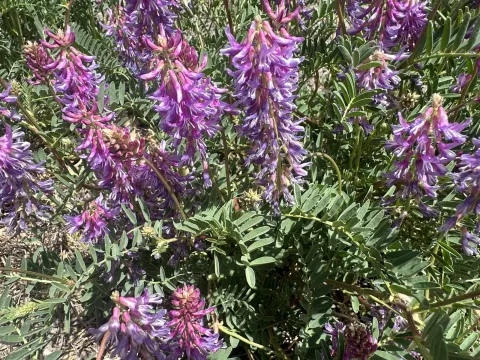
Astragalus bisulcatus
Astragalus bisulcatus
Astragalus bisulcatus, commonly known as two-grooved milkvetch, belongs to the Fabaceae family. As a perennial herbaceous plant, it is known for its deep taproot system, which helps the plant adapt to challenging environmental conditions during the germination stage.
What the section contains
Astragalus bisulcatus
Seeds should be sown in early spring when soil temperatures reach 8–10 degrees Celsius. Due to the hard seed coat, scarification is highly recommended to improve water absorption and ensure uniform germination across the field.
The seeding rate is typically 8–12 kg/ha depending on the desired plant density. Rows should be spaced 15–30 cm apart, and the seeds should be planted at a depth of 2–3 cm to provide the necessary conditions for sprout development.
During the first year, the plant allocates most of its energy to root development. Therefore, managing weeds during this establishment phase is critical for the long-term success of the crop stand.
Applying phosphorus-based fertilizers at planting encourages the formation of nitrogen-fixing nodules. This biological process is essential for the plant's health and its ability to thrive in nutrient-poor soils.
This species is highly drought-tolerant, making it an excellent choice for cultivation in arid and semi-arid regions. It performs best in open, sunny locations with minimal competition from taller, invasive plant species.
Astragalus bisulcatus is adaptable to various soil types, including sandy, loamy, and even slightly saline soils. Its ability to hyperaccumulate selenium makes it a natural bio-indicator for specific geological formations.
The ideal soil pH range for this crop is between 6.5 and 8.5. While it tolerates various textures, excellent soil drainage is mandatory, as the plant is highly susceptible to root damage in waterlogged or swampy conditions.
Temperature tolerance is one of its major strengths, as the plant survives harsh winters and wide temperature fluctuations common in continental climates without requiring special protection.
Proper aeration is essential for optimal root respiration. In compacted soils, the plant’s growth may be stunted, so agricultural practices should focus on maintaining a loose, well-structured soil profile through regular mechanical care.
Weevils and aphids represent the most significant threats, primarily targeting the reproductive structures and reducing overall seed yield. Integrated pest management strategies, including timely insecticide application, are effective in controlling these populations.
Fungal diseases like rust and leaf spots may occur during periods of high humidity. Improving field ventilation and ensuring proper spacing between rows can help mitigate these outbreaks naturally.
Because the plant accumulates selenium, it can become toxic to livestock if consumed in large quantities. Farmers must conduct forage analysis to ensure the safety of the plant material before grazing or harvesting.
Root rot caused by pathogens in poorly drained soils can lead to significant thinning of the crop stand. Using fungicide-treated seeds and practicing rotation are standard preventive measures for professional growers.
Competition from aggressive perennial weeds can overwhelm the crop, especially in the first year of life. Maintaining a clean field through regular monitoring is necessary to preserve the productivity of the legume stand.
Harvesting for forage should take place during the peak flowering stage to ensure the highest protein content. At this time, the plant provides the best nutritional value for cattle and other ruminants.
When producing hay, careful drying is required to prevent leaf loss, as the foliage contains the most valuable nutrients. Moisture content in finished hay should be maintained at or below 14% to ensure safe storage.
Seed harvesting requires precision, as the seed pods can shatter upon reaching full maturity. A two-stage harvest approach is recommended to capture maximum seed volume while minimizing field losses.
Post-harvest processing involves thorough cleaning to remove field debris and inert matter. Proper storage in cool, dry conditions prevents the degradation of seed viability over the winter months.
By implementing efficient agricultural machinery and adhering to strict drying protocols, producers can maximize the economic utility of Astragalus bisulcatus as both a high-quality forage and a potential botanical resource.