
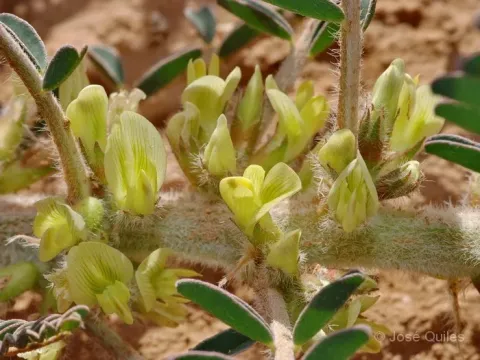
Astragalus akkensis
Astragalus akkensis
Astragalus akkensis is a perennial leguminous plant that requires specific seed preparation, specifically scarification, to ensure uniform germination.
What the section contains
Astragalus akkensis
The optimal time for sowing is early spring when the soil temperature consistently reaches about 5 to 10 degrees Celsius, ensuring adequate moisture.
Seeds should be planted at a shallow depth of approximately 1.5 to 2.5 centimeters to facilitate quick emergence and prevent seed exhaustion.
Row planting is standard practice, with sowing rates calibrated to achieve the desired plant density for high-quality biomass production.
Post-sowing soil compaction is highly recommended to improve moisture retention and create the necessary seed-to-soil contact for successful establishment.
This species thrives in well-lit, sunny environments and is best suited for sandy loam or well-drained loamy soil types with neutral pH.
It demonstrates excellent drought tolerance, attributed to a deep taproot system that allows the plant to access subsoil moisture during dry spells.
Astragalus akkensis is sensitive to waterlogging and poor soil aeration, so fields must have effective drainage systems to prevent root rot.
Fertilization should focus on phosphorus and potassium levels during the initial growth stages to support root development and nitrogen fixation.
Winter hardiness is a notable trait, enabling the crop to persist throughout cold seasons while maintaining its vitality for the following year.
Biomass yield depends largely on management practices, the age of the stand, and annual precipitation patterns within the growing region.
Under optimal management, the crop is capable of producing multiple cuts per season, providing a high-quality forage supply for livestock.
Peak biomass productivity is generally observed during the second and third years of stand life before natural thinning occurs.
For consistent high yields, regular maintenance and appropriate mineral nutrient supplementation after each harvest are essential for stimulating regrowth.
Expected yields for green mass range from 15 to 25 tons per hectare, depending on local environmental conditions and the intensity of care.
The main threats to Astragalus stands are fungal pathogens, particularly root rot, which may develop under conditions of high humidity and poor drainage.
Insect pests such as weevils can cause significant damage to foliage and reproductive parts, potentially reducing both biomass and seed production.
Good field aeration and density control are crucial cultural practices used to reduce the prevalence of rust and powdery mildew infections.
Integrated pest management strategies are often necessary to minimize crop loss while maintaining the viability of the legume stand.
- Regular inspection of the plant stand for signs of chlorosis or wilting.
- Controlling weed competition in early development stages.
- Using certified, high-quality seeds to minimize initial disease transmission.
Harvesting for high-quality hay should take place during the early flowering stage when protein content and nutritional value are at their peak.
Mowing height is a critical factor; cutting too low can damage the plant's regenerative tissues and severely delay regrowth between harvests.
Proper wilting and drying processes are necessary to ensure the final product maintains its nutritional density and prevents nutrient loss from leaf shattering.
When harvesting for seed, it is vital to monitor pod maturation to minimize seed loss due to shattering as the plants reach physiological maturity.
Equipment settings for harvesting must be carefully adjusted to handle the delicate nature of the seeds and ensure high harvest efficiency.