
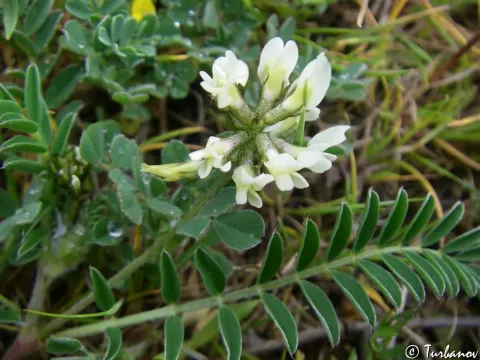
Astragalus aduncus
Astragalus aduncus
Astragalus aduncus is a perennial legume known for its remarkable resilience and ecological plasticity. Sowing should ideally occur in early spring, taking advantage of soil moisture reserves which are essential for the germination of hard-coated seeds.
What the section contains
Astragalus aduncus
Preparation of the seedbed is a crucial step involving deep plowing followed by smoothing to ensure uniform soil contact. Seeds should be planted at a shallow depth of 1–2 centimeters, which allows for stable and synchronized emergence across the field.
To overcome natural seed dormancy, scarification techniques are often employed before sowing. This practice breaks the seed coat, significantly increasing the field germination rate and ensuring that the initial plant population is sufficient.
The standard sowing method involves drilling with row spacing between 15 and 30 centimeters. Given the slow establishment rate during the first year, it is vital to maintain appropriate seeding rates to compete effectively against potential weeds.
During the first year, the crop invests heavily in root development rather than biomass. Therefore, proper weed management is critical during this period to ensure the seedlings are not smothered by invasive species or fast-growing weeds.
This species thrives in well-drained soils and is highly valued for its drought tolerance. It is well-adapted to poorer, rocky, or gravelly soils where other more demanding legumes might fail to produce a sustainable yield.
Being a sun-loving plant, it requires open areas with minimal shading to reach its full photosynthetic potential. It demonstrates excellent tolerance to the harsh environmental conditions characteristic of steppe and semi-arid regions.
Astragalus aduncus shows moderate demands for soil fertility, although phosphorus and potassium supplementation is recommended for optimal yield. It is essential to ensure the presence of suitable rhizobia to facilitate efficient atmospheric nitrogen fixation.
The plant adapts well to neutral or slightly alkaline soil conditions but performs poorly in highly acidic environments. Lime application may be necessary on acidic soils to create a more favorable environment for the root-symbiotic microflora.
Excellent winter hardiness is a defining feature of this species, allowing it to survive intense cold and lack of snow cover. This makes it an ideal candidate for improving pasture sustainability in regions with extreme climate variability.
The biomass productivity of this crop generally peaks during the third to fifth year of growth once the root system is fully established. Depending on the environmental conditions, the plant can produce multiple cuts per season.
In optimal conditions, the dry matter yield can be substantial, providing a reliable source of quality forage during mid-summer droughts when other grasses typically enter dormancy. The nutritional value remains high even after the plant matures.
The yield of green mass per hectare can range significantly based on the level of agronomic management and local rainfall. The species is known for maintaining its leaf quality, which contributes to higher protein levels in the harvested hay.
Seed production is an additional economic potential of this crop. However, successful harvesting of seeds requires careful attention to the timing of the flowering and pod formation cycles to optimize the yield potential.
The plant demonstrates a moderate recovery rate after cutting, which allows for either intensive hay production or controlled grazing practices. This versatility is highly beneficial for mixed-use agricultural enterprises.
Astragalus aduncus possesses a strong natural defense against many common legume diseases. However, high humidity and poor ventilation can occasionally lead to the development of powdery mildew in dense stands.
Insect pests, particularly weevils, can pose a risk to the generative parts of the plant, potentially reducing seed yields. Regular monitoring of the field is recommended to implement control measures before significant damage occurs.
Root rot is rarely an issue unless the field suffers from persistent waterlogging or poor drainage. Proper site selection and avoiding low-lying areas with stagnant water are the best preventive measures for healthy root systems.
Occasional damage from leaf-eating beetles can occur during the peak growth season. If the economic threshold of damage is exceeded, the application of selective, systemic insecticides is the standard corrective measure.
Improper cutting timing, especially performing the final cut too late in the autumn, can reduce the plant's winter energy stores. Following recommended harvesting schedules is essential to ensure vigorous growth the following spring.
Hay harvesting should ideally take place during the mass flowering phase to ensure the highest protein content and nutritional quality. Modern machinery should be used to minimize leaf loss, which is the most nutrient-dense part of the forage.
For seed collection, the harvest must occur when pods are mature but before they crack open to drop seeds. A two-stage harvesting process is often used, cutting the material into windrows to finish drying before threshing.
Drying the harvested material requires mechanical turning to ensure uniform moisture reduction. Protecting the hay from rain is critical to preventing nutrient leaching and quality degradation caused by mold and rot.
Proper storage in well-ventilated, dry sheds is necessary to preserve the quality of the forage over the winter months. Exposure to direct sunlight and moisture should be strictly avoided to maximize the shelf life of the crop.
When used as a pasture, rotational grazing is encouraged to prevent overgrazing. This practice allows the roots to recover and ensures the longevity and productivity of the field for many years to come.