
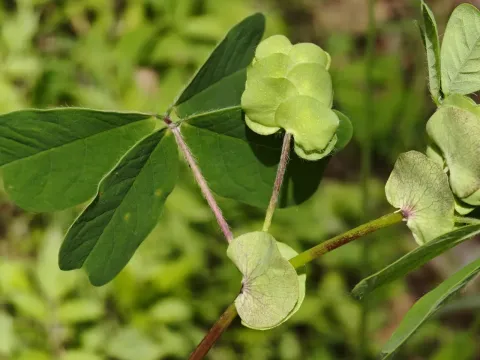
Amicia
Amicia
The sowing of Amicia typically takes place in the spring, once the soil has reached an optimal temperature to support active germination. Since the genus originates from temperate and mountainous regions of South America, avoiding late frost is crucial for successful establishment.
What the section contains

Amicia
Seeds of Amicia possess a hard seed coat, making scarification a necessary practice to improve germination rates. Pre-treating the seeds allows for faster water uptake, which is vital for ensuring uniform seedling emergence across the entire field.
Sowing depth should be maintained between 2 and 3 centimeters. A firm seedbed is essential, and light rolling after sowing helps establish good soil-to-seed contact, facilitating the rapid development of the radicle in the early stages of growth.
Row spacing should be carefully managed based on the final usage of the crop; wider rows are preferred for seed production to ensure adequate air circulation and light penetration, while denser spacing is used for biomass or forage cultivation.
Weed management in the first month is critical, as Amicia exhibits a relatively slow initial growth phase. Implementing mechanical or manual weeding in the early stages ensures the young seedlings are not outcompeted for nutrients or sunlight.
Amicia is a genus within the Fabaceae family, native to the diverse landscapes of South America. It thrives in well-drained, loamy or sandy soils, preferring a neutral to slightly acidic pH level for optimal nutrient availability.
The plant demonstrates good adaptability to temperate climates but requires protection from extreme weather conditions. Consistent moisture levels are ideal, although the plant shows a reasonable degree of resilience to temporary dry spells once established.
Abundant sunlight is a primary requirement for the healthy development of Amicia. Shaded environments significantly hinder its growth rate and reduce the production of floral and reproductive organs, necessitating open field selection for agricultural purposes.
As a legume, Amicia forms a symbiotic relationship with nitrogen-fixing bacteria. This biological process significantly reduces the need for external nitrogen fertilizers, making it an environmentally friendly option for crop rotation and soil fertility improvement.
Temperature fluctuations are a limiting factor for the cultivation of this genus. It prefers moderate conditions, typically between 18 and 25 degrees Celsius, as extreme cold or persistent heat can damage the foliage and impede overall plant vigor.
The yield potential of Amicia is highly dependent on environmental conditions and the intensity of crop management. When provided with adequate nutrients and moisture, the plant can produce multiple cuts per season, offering a consistent supply of biomass.
The forage value of the green mass is high, with leaves being particularly rich in essential proteins and minerals. This makes Amicia a valuable addition to the diet of ruminants, helping to enhance overall livestock health and productivity.
Peak yield is achieved during the flowering phase, which is when the nutrient concentration in the biomass is at its highest. Strategic harvesting at this stage ensures the best quality product for silage or dried hay production.
When used as a green manure, Amicia contributes significantly to soil organic matter content. Its incorporation into the soil improves structure and increases nitrogen levels, which benefits the subsequent crops in the rotation cycle significantly.
Monitoring the growth cycle allows for precise management of harvests. By optimizing the frequency of cuts, producers can maximize the total seasonal biomass output while maintaining the health and longevity of the plant stand.
Fungal pathogens such as root rot represent the most significant threat to Amicia, particularly in fields with poor drainage. Maintaining a dry, well-aerated soil environment is the best prevention strategy against these soil-borne diseases.
Pests like aphids and certain species of weevils can cause damage to the leaves and young shoots. Integrated Pest Management (IPM) practices, including the use of beneficial insects, are highly effective in controlling populations without heavy chemical intervention.
Nematodes can pose a hidden challenge to root systems, particularly in fields with intensive, continuous monocropping. Implementing a proper crop rotation sequence is essential to break the life cycle of these parasites and maintain field health.
Powdery mildew may occur during periods of high humidity and poor air circulation. Proper spacing between plants and early intervention to remove affected parts help prevent the rapid spread of the disease across the field.
Overall plant health is the strongest defense against threats. Providing balanced nutrition and adhering to best agronomic practices ensures the crop is robust enough to withstand mild pest or disease pressure throughout its lifecycle.
Harvesting Amicia requires a careful balance to preserve the nutrient-dense leaves. Using specialized machinery that minimizes physical impact during cutting is recommended to prevent excessive leaf shedding and loss of quality.
For hay production, rapid yet gentle drying is necessary to retain nutritional integrity. Drying in windrows with adequate airflow helps maintain the vibrant color and high protein content of the forage, which are key quality indicators.
Seed harvesting should be timed precisely to coincide with full maturation, ideally during hours of higher humidity to prevent pod shattering. This strategy significantly reduces grain loss during mechanical harvesting operations in the field.
Post-harvest processing involves cleaning seeds of debris and reducing moisture content to safe levels for storage. Maintaining consistent, cool, and dry storage conditions is vital for preserving seed viability for future planting seasons.
Managing the final cut before winter is crucial for perennial endurance. Leaving sufficient stubble helps protect the base of the plant from cold stress, ensuring it remains viable for rapid regrowth when spring arrives.