
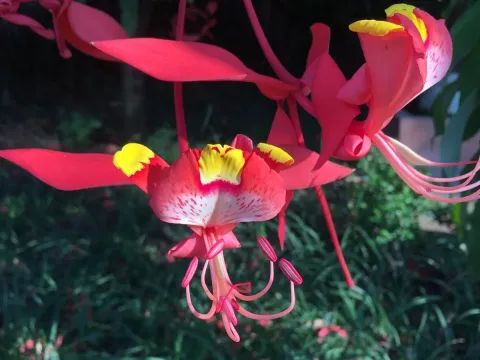
Amherstia
Amherstia
Amherstia nobilis, commonly known as the Pride of Burma, is a prestigious member of the Fabaceae family. This tree is renowned for its spectacular, pendulous, orchid-like flowers and is native to the tropical forests of Myanmar, requiring a strictly controlled environment to thrive.
What the section contains

Amherstia
The cultural requirements are centered around stable tropical temperatures that must never drop below 15 degrees Celsius. The species is highly sensitive to cold stress, making it exclusively a greenhouse or tropical conservatory plant in most parts of the world.
Ideal soil for Amherstia should be fertile, well-draining, and rich in organic matter. Loamy soil textures that retain moisture while preventing saturation are preferred to avoid root asphyxiation, a common cause of failure in containerized cultivation.
High humidity levels (between 70% and 80%) are essential for the health of this tree. Growers should use misting systems or humidifiers to replicate its natural environment, especially in controlled greenhouse setups where artificial heating can reduce ambient moisture.
Fertilization should be applied during the growing season with a focus on balanced NPK ratios, supplemented with micronutrients. Because the tree is susceptible to nutrient imbalances, water quality should also be monitored, with soft or rainwater being the preferred choice for irrigation.
The primary pests affecting Amherstia in protected environments are spider mites, mealybugs, and scale insects. These organisms thrive in sheltered areas where the tree’s dense foliage provides cover, necessitating regular inspections and prophylactic management.
Root rot caused by pathogens like Phytophthora is a major threat linked to overwatering and inadequate substrate drainage. Once root rot symptoms appear, the tree’s recovery is difficult, emphasizing the importance of preventive water management.
Nutrient deficiencies, specifically chlorosis, are common when the substrate pH is not properly maintained or when iron is unavailable. This can lead to yellowing leaves and reduced vigor, which can be mitigated by adjusting the soil chemistry.
Environmental stress, particularly from cold drafts or sudden humidity fluctuations, often acts as a precursor to secondary disease infections. Maintaining a constant microclimate is the most effective way to prevent the weakening of the plant’s natural defenses.
During the dormant season, the tree should be kept drier to reduce the risk of mold and fungal growth on the leaves. Proper ventilation within the greenhouse is crucial to prevent stagnant air pockets that encourage the spread of spores and pests.