
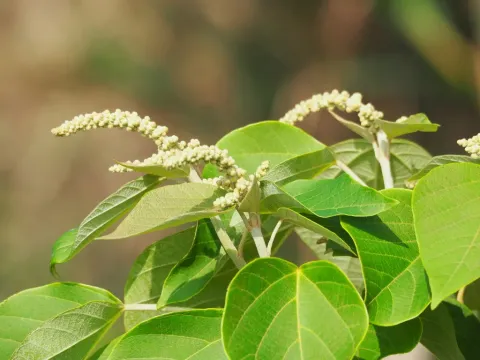
Mallotus
Mallotus
Mallotus is a diverse genus of trees and shrubs belonging to the Euphorbiaceae family. With over 150 identified species, these plants are native to the tropical and subtropical regions of Africa, Asia, and the Pacific islands, thriving in warm and humid environments.
What the section contains
 Japanese mallotus
Mallotus japonicus
Japanese mallotus
Mallotus japonicus
 Mallotus barbatus
Mallotus distans
Mallotus distans
Mallotus barbatus
Mallotus barbatus
Mallotus distans
Mallotus distans
 Mallotus nudiflorus
Mallotus nudiflorus
Mallotus nudiflorus
 Mallotus oppositifolius
Mallotus oppositifolius
Mallotus oppositifolius
 Mallotus paniculatus
Mallotus paniculatus
Mallotus paniculatus
 Mallotus philippensis
Mallotus philippensis
Mallotus philippensis
 Mallotus resinosus
Mallotus resinosus
Mallotus resinosus
 Mallotus rhamnifolius
Mallotus rhamnifolius
Mallotus rhamnifolius
 Mallotus tetracoccus
Mallotus tetracoccus
Mallotus tetracoccus
Mallotus
The cultivation of Mallotus requires well-drained, nutrient-rich soil to support its relatively rapid vegetative growth. These plants exhibit a high demand for moisture, particularly during the rainy season, while requiring adequate drainage to prevent waterlogging, which the roots cannot tolerate.
Climate requirements are strict: the plants need consistent tropical temperatures throughout the year. They are highly sensitive to frost, which makes them unsuitable for outdoor cultivation in temperate regions without specialized greenhouse conditions.
Agronomic management involves standard practices such as pruning to maintain canopy health and ensure proper light penetration to the inner branches. Regular monitoring of soil pH is essential, as the plants perform best in slightly acidic to neutral soil environments.
The industrial significance of the genus is primarily linked to the production of dyes and medicinal extracts. The gland-covered fruits of certain species are processed to harvest valuable pigments used in both traditional textile coloring and modern cosmetic industries.
The major threats to Mallotus plantations include scale insects and various leaf-eating caterpillars. These pests can significantly reduce the photosynthetic surface area, leading to poor fruit set and reduced pigment yield if not managed early in the season.
Fungal pathogens represent a primary concern in high-humidity areas. Conditions like leaf spot and powdery mildew can spread rapidly if the planting density is too high, preventing air from circulating effectively through the plantation.
Root rot is the most devastating disease, typically caused by soil-borne fungi favored by waterlogged conditions. Proper field drainage and the use of healthy, disease-free seedlings are the most effective preventive measures available to farmers.
Integrated Pest Management (IPM) is the recommended approach for maintaining healthy crops. This includes using beneficial insects to control pest populations, which protects the purity of the raw materials harvested from the plant.
Weed control is also crucial during the establishment phase. Competition for nutrients and water can stunt growth, while some invasive weeds serve as alternative hosts for viruses that can be transmitted to Mallotus by insect vectors.