
Marsh spurge
Euphorbia uliginosa
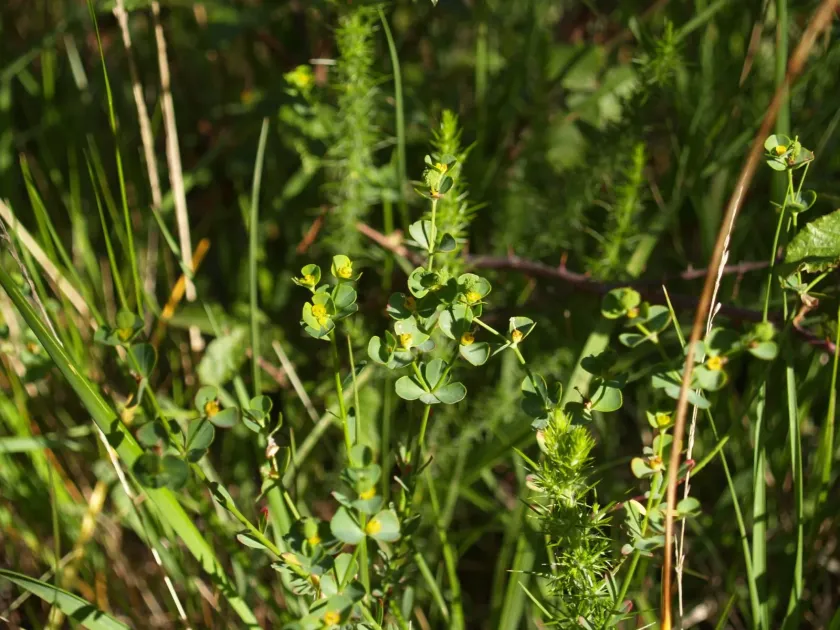
Description
Growing requirements
Marsh spurge (Euphorbia uliginosa) is a herbaceous perennial belonging to the Euphorbiaceae family. This species is native to wetland environments, displaying a unique adaptation to saturated soils and marshy habitats, which differentiates it from most other drought-tolerant spurge species.
The agronomic requirements for this crop focus primarily on soil moisture. It thrives in heavy, clay-rich soils that retain water throughout the growing season. Unlike typical crops that suffer from waterlogging, the marsh spurge flourishes in these conditions, making it an excellent choice for reclamation of swampy areas.
Climatic preferences include temperate conditions with consistent precipitation. It is highly winter-hardy and does not require special winter protection in its natural distribution range. However, it requires full sun to partial shade; insufficient light exposure often leads to reduced flowering and structural weakness.
The cultivation techniques involve careful site selection near natural water sources or in artificial depressions. Regular soil analysis is recommended to ensure adequate nutrient levels, specifically nitrogen and phosphorus, which promote lush foliage development, as the crop is often utilized for its ornamental green mass.
Economically, marsh spurge is valued in ecological engineering and landscape architecture. It is planted along pond margins and stream banks to prevent soil erosion. Its ability to thrive in wet conditions makes it a sustainable biological filter in integrated water management systems.
Main diseases and pests
Pathogenic threats to Euphorbia uliginosa primarily involve fungal infections that arise in poor air circulation environments. Powdery mildew is the most common issue, appearing as white patches on leaves, which requires immediate fungicide application to prevent the spread to the entire plant population.
Insect pests such as aphids are frequently observed during the warm summer months. They feed on the succulent tissue of the spurge, potentially causing stunted growth. Integrated pest management, focusing on biological controls, is often preferred to maintain the health of the surrounding wetland ecosystem.
Root zone pests, including various types of soil-borne larvae, can weaken the plant's anchorage. Periodic checks of the root collar and soil environment help in identifying potential infestations before they become critical and lead to the collapse of the plants.
Weed management remains an essential part of the early cultivation phase. Because the plant establishes itself relatively slowly, suppressing competitive invasive species is necessary during the first year of growth to ensure a healthy and uniform stand.
When handling the plants during maintenance or control measures, it is vital to remember that the milky sap is a skin irritant. Protective equipment should always be worn to prevent dermatitis during weeding, pruning, or pesticide application procedures.