
Ledebour spurge
Euphorbia ledebourii
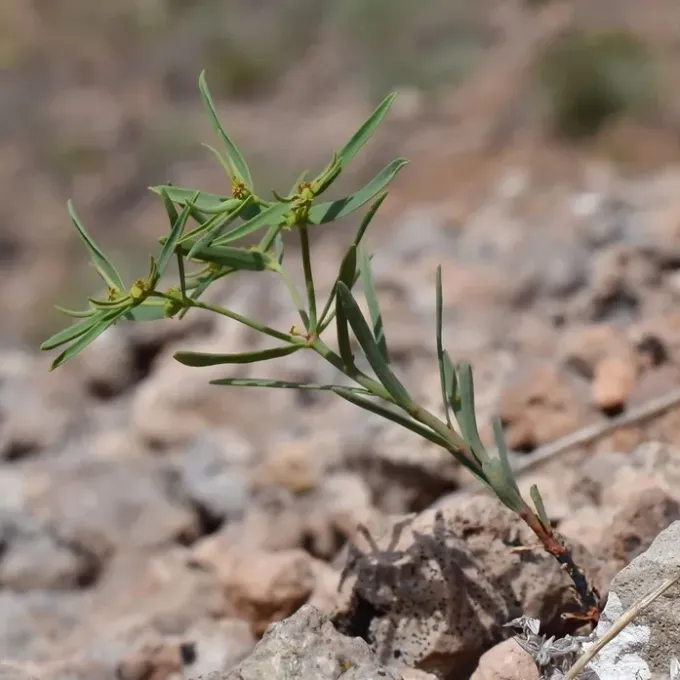
Description
Growing requirements
Ledebour spurge (Euphorbia ledebourii) is a distinct perennial species within the Euphorbiaceae family. It is recognized for its unique botanical structure and high adaptability to specific soil conditions, making it an interesting subject for specialized agricultural study.
The plant thrives in regions with stable environmental conditions, requiring exposure to significant sunlight to maintain healthy growth. Its physiological structure allows it to accumulate moisture in tissues, providing a natural defense against arid conditions.
Regarding soil requirements, the culture prefers well-drained environments with a light texture. Heavy clay soils are generally unsuitable as they inhibit root respiration and increase the risk of decay during periods of high humidity.
The agronomic management focuses on maintaining soil aeration and proper drainage. Irrigation should be applied strategically, ensuring that the moisture level corresponds to the plant's metabolic stage, avoiding excessive soil saturation.
Nutrition management involves the application of balanced NPK fertilizers during the early spring to support initial development. Nutrient levels should be monitored to prevent excessive vegetative growth that could compromise the plant's structural integrity.
Main diseases and pests
Like many species in its family, the Ledebour spurge possesses natural defensive properties due to its milky latex. However, it remains susceptible to specific pathogens when environmental conditions are suboptimal or stability is compromised.
Root system vulnerability is the primary concern for agronomists, particularly concerning fungal infections such as Pythium and Phytophthora. These diseases typically flourish in waterlogged soil environments where oxygen availability is limited.
Insect pests such as spider mites can cause significant damage in greenhouses or protected farming areas. These pests thrive in dry and warm conditions, necessitating proactive monitoring and localized treatments to control their populations.
Mealybugs are another potential threat, often found in hidden areas of the stems. Early identification is crucial for effective control, as these insects can quickly sap the plant's energy and introduce viral infections.
Management strategies should prioritize integrated pest control (IPM), focusing on sanitation and maintaining optimal plant health as the most effective primary defense against biological threats.