
Mallotus tetracoccus
Mallotus tetracoccus
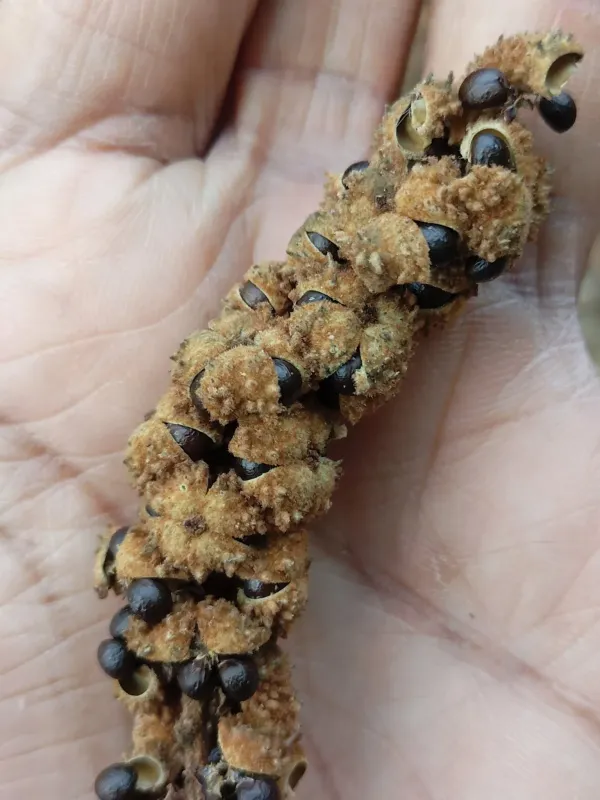
Description
Growing requirements
Mallotus tetracoccus is a significant tree species belonging to the Euphorbiaceae family. Renowned for its rapid growth rate, it functions as a pioneer species in tropical ecosystems, playing a vital role in natural reforestation processes across Southeast Asia.
The native distribution of this species spans across regions such as India, Myanmar, and Thailand. It typically thrives in tropical evergreen forests, where it occupies open spaces and disturbed areas, effectively stabilizing the soil and providing shade for secondary forest development.
To cultivate Mallotus tetracoccus successfully, it is essential to provide a climate with consistent warmth and high humidity. The tree requires well-drained, nutrient-rich soils to thrive and cannot tolerate frost, which makes its cultivation limited to tropical and subtropical latitudes.
The agrotechnical management of this crop involves nursery preparation to produce healthy seedlings. Plantation spacing is critical to ensure enough light for each individual tree, as the species is highly light-demanding during its juvenile growth stage.
Economically, Mallotus tetracoccus is highly valued for its light, soft wood. This timber is frequently utilized in the production of plywood, matches, and high-quality paper pulp. Additionally, the seeds are known to yield non-edible technical oils used in manufacturing.
Main diseases and pests
The species is primarily threatened by fungal pathogens that cause root and stem rots, especially in poorly drained plantation sites. Various leaf-eating insects, including specific caterpillars, can also significantly impact foliage development if not monitored.