
Mallotus philippensis
Mallotus philippensis
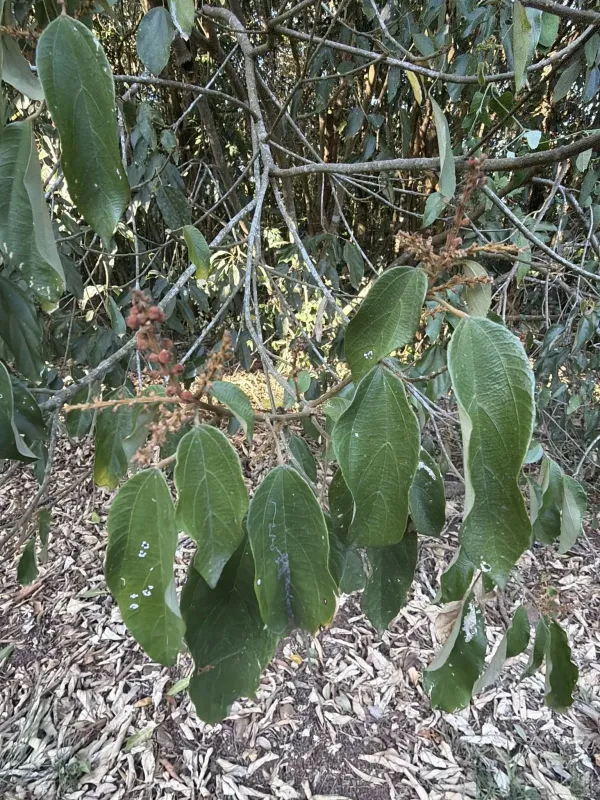
Description
Growing requirements
Mallotus philippensis, commonly known as the Kamala tree, is an evergreen species belonging to the Euphorbiaceae family. It is native to the tropical regions of Asia, India, and Australia, where it thrives in diverse forest habitats.
The tree prefers a tropical climate characterized by distinct wet and dry seasons. It requires full sun exposure to thrive, as excessive shading can significantly reduce the tree's vigor and the overall yield of the valuable fruit covering.
Soil requirements for the species include well-drained, sandy or loamy soils. While it can survive on rocky, nutrient-poor slopes, optimal development occurs in soils with moderate organic matter content and good aeration.
The plant is highly frost-sensitive and should only be cultivated in regions that do not experience freezing temperatures. It is well-adapted to surviving occasional periods of drought once the root system is established.
Agrotechnical management involves regular weeding around the base of young trees and ensuring that the plantation layout allows for sufficient air circulation, which helps in preventing fungal issues during humid periods.
Harvesting
The primary economic product of Mallotus philippensis is the red granular powder known as Kamala, which coats the exterior of its capsule fruits. Harvesting is conducted when the fruit capsules reach full maturity.
Workers traditionally collect the powder by brushing or shaking the fruit capsules over containers, followed by winnowing to remove dust and other impurities. This natural red dye is highly valued for coloring silk and wool fibers.
In addition to its role in the textile industry, the Kamala powder serves as a traditional anthelmintic medication, making it a sought-after commodity in pharmaceutical and herbal supplement supply chains.
The timber of the Mallotus tree is dense and durable. It is locally harvested to manufacture handles for agricultural tools, walking sticks, and various structural components in rural home construction.
Post-harvest management is crucial to maintaining the quality of the dye. Proper drying and moisture control are essential to prevent the degradation of the active pigment components during storage and transport.