
Manihot pseudoglaziovii
Manihot pseudoglaziovii
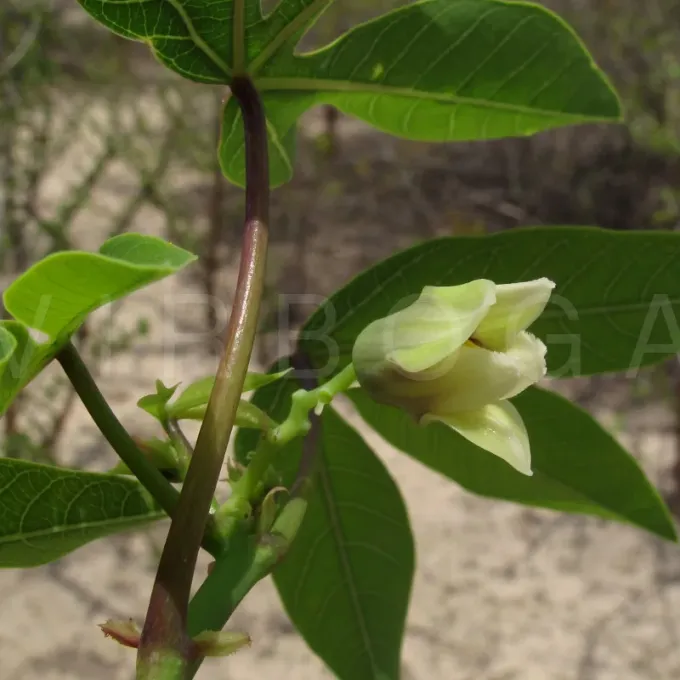
Description
Sowing dates
Manihot pseudoglaziovii, a member of the Euphorbiaceae family, is a woody perennial species naturally adapted to dry tropical environments.
Propagation is typically achieved through stem cuttings, which are harvested from healthy, mature plants to ensure genetic consistency.
Cuttings are usually planted at the onset of the rainy season to establish deep roots before the intense dry conditions of the summer months.
Field preparation involves creating mounds or ridges, which provide the necessary depth for root tuber development while ensuring adequate drainage.
The spacing between plants should be managed to balance the growth of foliage for fodder production and the development of starch-rich roots.
Growing requirements
This crop is highly prized for its exceptional drought tolerance, allowing it to thrive in arid zones where water-intensive crops fail.
It prefers sandy or light loamy soils that provide excellent aeration, as the plant is susceptible to root decay in waterlogged conditions.
Optimal growth occurs at high temperatures, typically ranging from 25 to 35 degrees Celsius, with plenty of direct sunlight exposure.
Soil fertility requirements are relatively low, but initial fertilization can significantly boost biomass production in degraded soils.
Providing a site with natural slope or good drainage is critical, as stagnant water is the primary limiting factor for successful cultivation.
Yield
The economic value of this plant is multifaceted, serving as both a source of starchy tubers and highly nutritious livestock forage.
The leaves are rich in proteins, making them a sustainable feed alternative for rural farming communities in dryland regions.
Tuber yields can be consistent even under prolonged dry spells, providing a food security buffer for farmers in marginal areas.
Starch extraction from the tubers is used in various local industrial applications, including the production of organic adhesives and bio-materials.
Harvesting strategies are often balanced, involving periodic leaf harvesting while allowing roots to accumulate mass over several growing seasons.
Main diseases and pests
Pests such as spider mites and mealybugs can cause significant damage to the leaf canopy, particularly during periods of low humidity.
Root and stem rot caused by fungal pathogens are major threats that usually occur when fields are poorly drained or over-irrigated.
Viral infections transmitted by whiteflies represent a serious threat, necessitating the use of disease-resistant planting materials.
Bacterial diseases can rapidly spread through cuttings if the source material is not properly sanitized or screened before propagation.
Integrated pest management strategies are essential to maintain plantation health and ensure long-term sustainability of the yields.
Harvesting
Harvesting of the storage roots is performed when the plants reach maturity, often indicated by yellowing and natural shedding of foliage.
Manual digging remains the most effective way to extract roots without causing structural damage, which is essential for shelf-life longevity.
Post-harvest handling includes cleaning the tubers and drying them to reduce moisture content before storage or immediate industrial processing.
Care must be taken to remove damaged or diseased roots during the initial sorting process to prevent contamination of the rest of the crop.
Proper scheduling of the harvest cycle allows farmers to capture the peak starch concentration in the roots, maximizing overall efficiency.