
Madagascar jewel
Euphorbia leuconeura
Description
Growing requirements
The Madagascar jewel (Euphorbia leuconeura) is a perennial plant belonging to the Euphorbiaceae family. Native to the tropical forests of Madagascar, this plant has adapted to warm, humid environments, making it a popular choice for indoor cultivation worldwide.
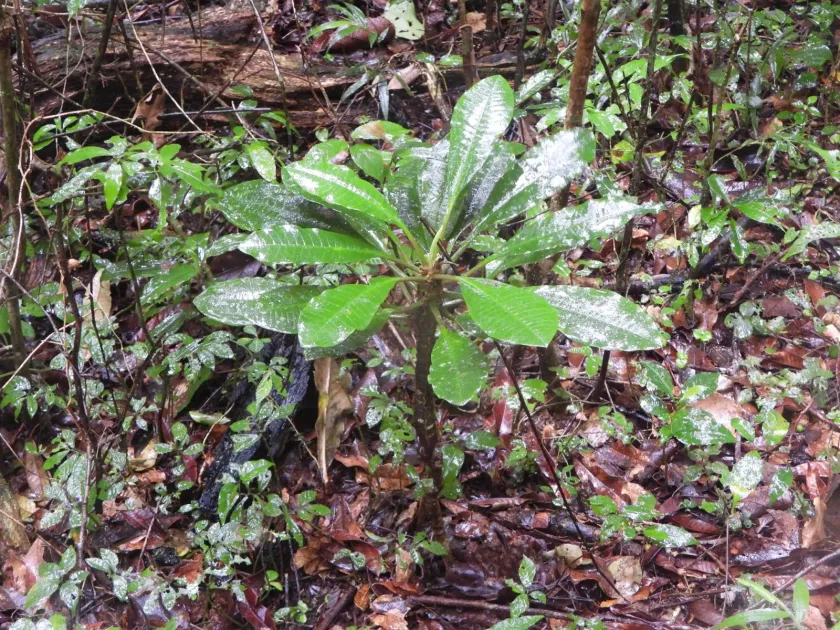
Botanically, it is known for its distinct, five-ribbed stem that becomes woody as the plant matures. The foliage features dark green leaves with prominent white veins, which are arranged in a rosette pattern at the top of the stem.
Regarding cultivation requirements, the plant prefers bright, indirect sunlight. While it can tolerate some morning sun, direct exposure during the peak of the day can cause leaf scorch, particularly if the plant is not acclimated.
The soil substrate must be well-draining. A mix designed for cacti or succulents, supplemented with additional perlite or pumice, ensures proper aeration and prevents the roots from remaining in stagnant water, which is critical for health.
Temperature management is key to sustained growth. Ideally, the plant should be kept in environments between 20°C and 25°C. Exposure to temperatures below 15°C should be strictly avoided to prevent tissue damage and winter dormancy issues.
Main diseases and pests
The primary threats to Euphorbia leuconeura are root rot and fungal infections, typically triggered by overwatering or poor drainage systems. Maintaining a dry-out period between waterings is essential to mitigate this risk.
Pest management is another important aspect. Mealybugs are common intruders that congregate in the leaf axils. These pests are easily identified by the white, cotton-like substance they leave behind on the plant's surface.
Spider mites are also frequent threats, especially in environments where humidity levels are chronically low. Regular inspection of the underside of leaves can help in identifying an infestation at an early stage.
Biological safety is paramount because the white sap of the plant is highly toxic. It contains diterpene esters that are irritants to the skin and eyes, necessitating the use of gloves and protective eyewear during propagation or pruning.
If the plant shows signs of distress, such as leaf yellowing or sudden drop, one must first verify the soil moisture and root condition. Cultural adjustments, such as improving ventilation or relocating to a more suitable light source, are usually sufficient for recovery.