
Mallotus paniculatus
Mallotus paniculatus
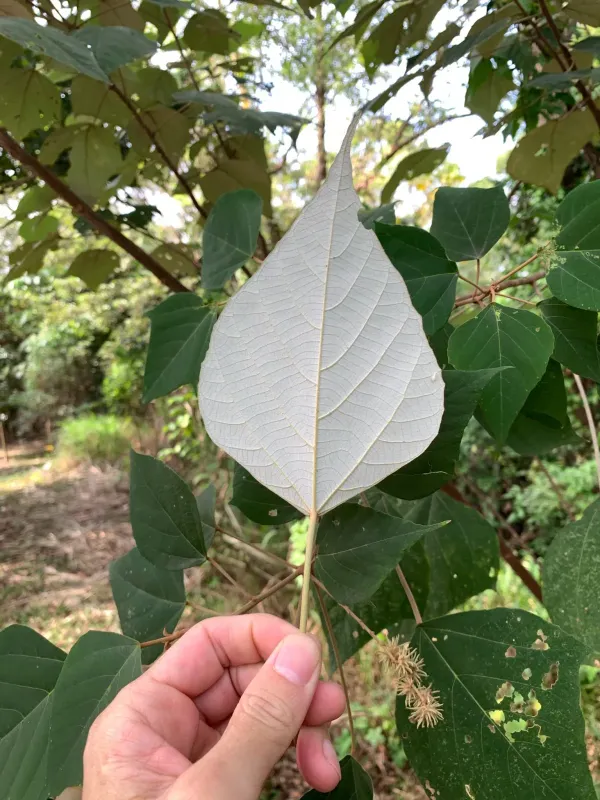
Description
Sowing dates
Propagation of Mallotus paniculatus is primarily achieved through seeds, which require specific pre-sowing treatments to ensure uniform germination.
The sowing process is typically scheduled to coincide with the onset of the rainy season to provide consistent soil moisture for developing seedlings.
Seeds are placed in nursery beds or containers with well-aerated soil media to prevent fungal damping-off.
Seedling growth in the nursery phase usually lasts several months until the plants reach a robust size suitable for field transplantation.
Proper spacing during the planting phase is essential to allow for the tree's rapid crown expansion and overall healthy development.
Growing requirements
Mallotus paniculatus is a member of the Euphorbiaceae family, recognized for its role as a pioneer species in forest succession.
The plant thrives in tropical climates characterized by high temperatures and significant annual rainfall patterns.
It prefers fertile, well-drained loamy soils but exhibits a notable ability to grow in degraded landscapes, helping in soil rehabilitation.
Sunlight is a critical requirement for this species; it requires full sun exposure to maintain its high growth rate and vigor.
Care must be taken to ensure the planting site is not prone to waterlogging, as the species is sensitive to poor soil aeration.
Yield
The economic value of this crop is largely driven by its exceptionally fast growth rate and high biomass production.
Its timber is widely used for light construction, plywood manufacturing, and the production of matchsticks and packing crates.
The wood serves as an excellent source of raw material for pulp and paper industries in tropical regions.
Furthermore, the species provides high-quality charcoal, serving as a sustainable energy source for local communities.
Sustainable plantation management allows for periodic harvesting, making it a reliable resource for wood-based industries.
Main diseases and pests
Common threats to plantations include various species of defoliating insects that can reduce the tree's photosynthetic capacity.
Fungal diseases related to high humidity can affect the foliage and stems if airflow within the plantation is restricted.
Root rot pathogens may emerge in compacted or poorly drained soils, posing a significant risk to overall plantation health.
Integrated pest management strategies are recommended, emphasizing cultural practices over heavy chemical intervention.
Monitoring the forest health during the rainy season is essential to catch potential infestations or infections before they spread.
Harvesting
The harvest cycle for Mallotus paniculatus is relatively short, with commercial maturity typically reached within 7 to 10 years.
Harvesting involves felling the trees, followed by immediate processing to ensure the timber remains in high-quality condition.
Because the tree regenerates via coppicing, many plantations can yield multiple harvests from a single original planting.
Efficient extraction and on-site sorting contribute to reducing logistics costs and maximizing the profitability of the timber output.
Post-harvest site preparation is minimal, allowing for rapid regeneration of the next crop cycle in sustainable systems.