
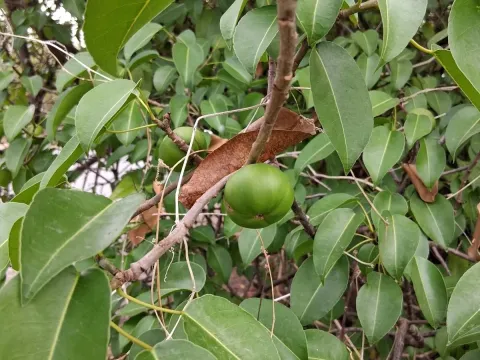
Manchineel tree
Hippomane
The Manchineel tree (Hippomane mancinella) belongs to the Euphorbiaceae family and is indigenous to the Caribbean, Florida, and the coastal regions of Central and South America.
What the section contains

Manchineel tree
It is an evergreen tree that can reach heights of up to 15 meters, characterized by its shiny, leathery leaves and small, nondescript flowers. The fruit resembles a small green apple but is lethal if consumed.
The species requires a tropical climate with high humidity and thrives in sandy, saline soils. It plays a critical role in coastal ecosystems by stabilizing sand dunes and preventing soil erosion.
Because the sap is extremely corrosive, the tree has no commercial agricultural application. It is primarily studied for its potent chemical defenses rather than cultivated for production.
In nature, the trees propagate via seeds that are highly resistant to saltwater, allowing them to travel along ocean currents and colonize distant coastal habitats effectively.
The Manchineel tree is virtually immune to traditional plant diseases and pests due to its highly toxic latex sap, which acts as a powerful deterrent against herbivores and microorganisms.
Fungal infections and insect infestations are rarely observed, as the sap contains chemical compounds that prevent the colonization of parasites and pathogens on its bark or leaves.
The primary threat to the Manchineel population is human intervention; trees are often removed from public beaches and parks because they pose a severe health hazard to unsuspecting people.
Wood durability is exceptional because of the same toxicity that protects the living tree, making it resistant to rot and wood-boring insects, which contributes to its long lifespan in the wild.
There are no known agricultural pests that impact the tree's health; consequently, no pest management or chemical control protocols exist for this specific species in the forestry sector.