
Loricata Spurge
Euphorbia loricata
Description
Growing requirements
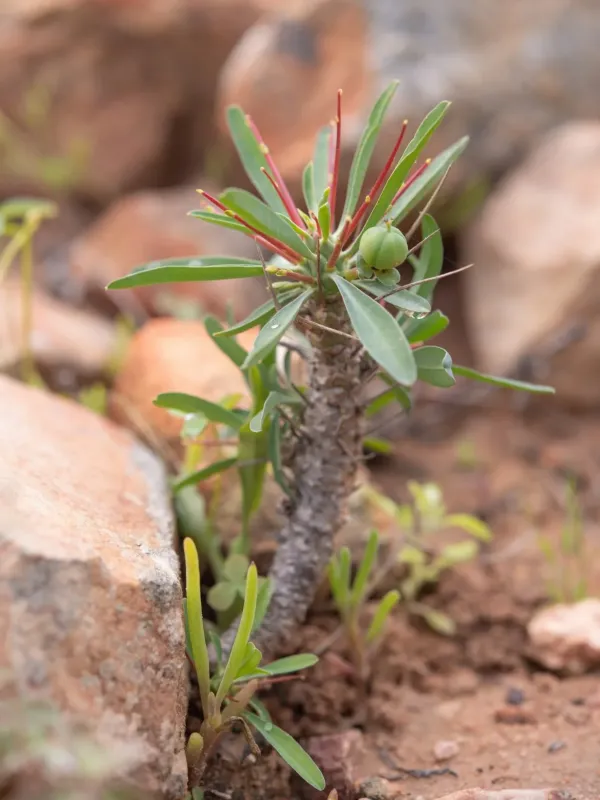
Euphorbia loricata, known as the Loricata Spurge, is a distinct succulent species belonging to the Euphorbiaceae family. It is native to the arid areas of South Africa, where it has evolved to survive in harsh, stony environments.
This species thrives under intense light conditions. When kept indoors, it requires a southern window exposure or high-intensity grow lights to maintain its compact, armadillo-like structure and characteristic coloration.
The substrate must provide excellent drainage. A mix comprising coarse sand, pumice, and minimal organic matter is ideal for ensuring that water passes through quickly, preventing stagnation around the root ball.
Watering requirements follow the cycle of the plant’s dormant and active phases. During the growing season, water thoroughly but infrequently, allowing the soil to dry out completely before the next irrigation.
This plant is primarily cultivated by enthusiasts for its sculptural appearance, making it a prized specimen for arid-style garden displays and specialized succulent collections worldwide.
Main diseases and pests
Root rot is the most common fatal condition for Euphorbia loricata, usually triggered by cold, damp conditions which are contrary to its natural desert habitat.
Mealybugs and spider mites are the primary pests that can infest the crevices between the plant's scales, requiring vigilant inspection and targeted treatment.
Fungal infections can develop if the plant is kept in an environment with poor air circulation, leading to dark, sunken spots on the epidermis.
Extreme care must be taken when pruning or handling the plant, as its milky latex is toxic and can cause significant skin or eye irritation upon contact.
To ensure long-term health, growers should avoid overhead watering, which can trap moisture in the textured surface of the stem, encouraging pathogens to take hold.