
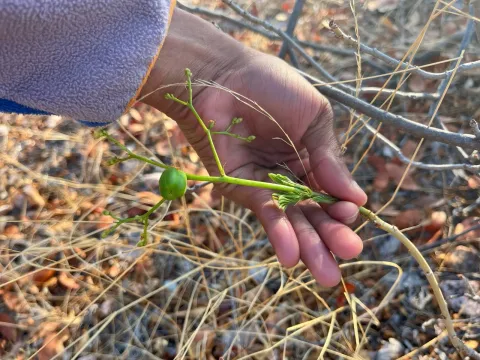
Jatropha messinica
Jatropha messinica
Jatropha messinica is a woody shrub belonging to the Euphorbiaceae family. This species is native to arid and semi-arid regions, primarily found in Eastern and Southern Africa, where it thrives in harsh environmental conditions.
What the section contains
Jatropha messinica
Botanically, it is known for its drought tolerance and deep root system, which allows it to extract moisture from deeper soil layers. The plant typically reaches a height of two to four meters, depending on the specific site quality and water availability.
The crop requires full sun exposure and warm temperatures, ideally between 20°C and 35°C. It is intolerant of frost, making it suitable for cultivation only in frost-free tropical or subtropical agro-ecological zones.
Soil requirements focus on excellent drainage to prevent root rot. While the plant can survive in nutrient-poor soils, improved yields are typically observed in well-structured sandy loams with a near-neutral pH balance.
Economically, Jatropha messinica is cultivated for its seeds, which contain high concentrations of non-edible vegetable oil. This oil is processed primarily for biodiesel production and serves as a vital resource for rural energy independence projects.
Despite the presence of toxic compounds in its sap, which serve as a natural defense mechanism, the plant is susceptible to certain agricultural pests. Early detection is critical to maintaining high plantation productivity.
Fungal infections, particularly root rot, represent the most significant threat. These are often triggered by improper irrigation management or poor soil drainage, necessitating careful oversight of water levels within the field.
Insects such as whiteflies and aphids may infest young leaves and stems, causing localized damage. Farmers should employ integrated pest management (IPM) strategies, combining biological controls with selective chemical treatments.
Weed competition during the early establishment phase can severely stunt growth. Consistent mechanical weeding between rows is essential to ensure that young Jatropha plants have sufficient access to nutrients and sunlight.
Maintaining a healthy crop density is one of the most effective ways to reduce disease spread. By ensuring adequate airflow between shrubs, growers can significantly decrease the incidence of mold and bacterial pathogens.