
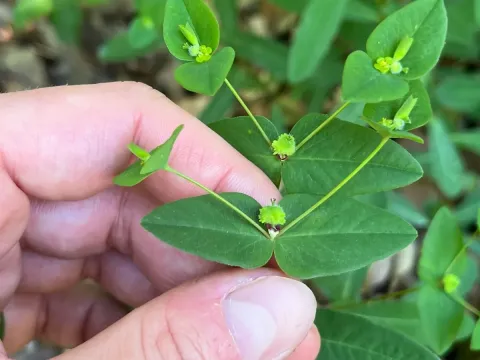
Euphorbia deseglisei
Euphorbia deseglisei
Euphorbia deseglisei is a perennial weed that propagates through both seeds and an extensive root system, making its presence in agricultural fields a persistent challenge.
What the section contains
Euphorbia deseglisei
Seed germination typically occurs in early spring as soil temperatures reach approximately 8 to 10 degrees Celsius, allowing the plant to emerge early in the season.
The seeds have the ability to germinate from significant soil depths, which necessitates deep primary tillage to prevent mass emergence before the main crop is sown.
Vegetative reproduction through root suckers is particularly aggressive, meaning that mechanical disturbance without subsequent removal often stimulates further spreading.
Effective management requires a combination of early-season tillage to exhaust the nutrient reserves in the root system and competitive crop rotation practices.
This species belongs to the Euphorbiaceae family and exhibits significant adaptability to various soil types, ranging from fertile loams to sandy substrates.
Euphorbia deseglisei is highly drought-tolerant, utilizing a deep taproot system to access moisture when other surface-rooting plants begin to suffer from water stress.
It prefers sunny environments, although it can survive in partial shade, it typically thrives in open field conditions where direct sunlight promotes rapid biomass accumulation.
Soil pH levels generally do not act as a restrictive factor for the species, as it effectively colonizes a wide range of agricultural landscapes across its natural range.
Optimal growth is observed in well-aerated soils; however, the plant is hardy enough to withstand short-term compaction and lower levels of oxygen in the root zone.
Common plant diseases affecting this species include rust fungi, which can reduce photosynthetic efficiency and overall plant vigor during the peak summer months.
The presence of specialized aphids that feed on the latex of the Euphorbia genus acts as a biological regulator, though rarely sufficient to control weed populations.
Viral pathogens may utilize this plant as a reservoir host, potentially spreading infections to nearby commercial crops through insect vectors like aphids and whiteflies.
While the plant is generally robust, prolonged waterlogging can lead to secondary root decay, making it susceptible to various soil-borne pathogenic fungi.
- Rust fungal infections
- Aphid infestations
- Viral host potential
- Root decay under excessive moisture