
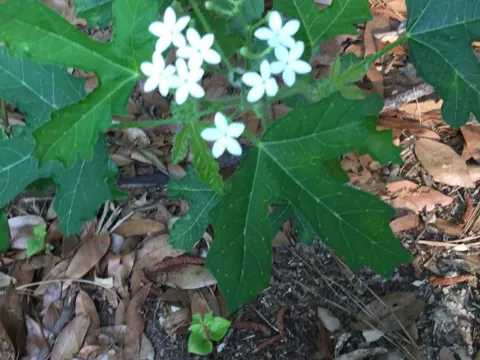
Jatropha urens
Jatropha urens
Jatropha urens, commonly known as the stinging jatropha, is a perennial shrub belonging to the Euphorbiaceae family. This species is native to Central and South America, where it thrives in warm climates and well-drained soils, often acting as a pioneer species in disturbed areas.
What the section contains
Jatropha urens
The plant is biologically characterized by its dense covering of stinging hairs, which contain a toxin capable of causing significant skin irritation upon contact. This unique adaptation serves as a robust defense mechanism against herbivore predation in the wild.
Optimal growth is achieved in tropical and subtropical conditions with temperatures consistently above 18-20 degrees Celsius. It requires full sunlight to maximize photosynthetic efficiency and typically performs poorly in regions experiencing frost or prolonged cold spells.
Soil requirements focus on high permeability; rocky, sandy, or well-aerated loam soils are ideal. As a drought-tolerant species, it is highly efficient in water usage, though supplemental irrigation can significantly enhance yield during extended dry periods.
Cultivation practices involve proper spacing to allow for airflow and prevent moisture buildup, which can lead to fungal issues. While not a conventional food crop due to its toxicity, its potential as a feedstock for biofuels remains a subject of ongoing agricultural research.
Common pests include aphids and whiteflies, which tend to congregate on the undersides of leaves, causing structural weakness. Biological control agents or targeted organic sprays are recommended to maintain plant health without disrupting the local ecosystem.
Soil-borne diseases such as root rot represent the most significant threat to plant longevity in heavy or waterlogged soils. To mitigate this, farmers should ensure proper bed preparation and avoid excess fertilization, which can encourage disease progression.