
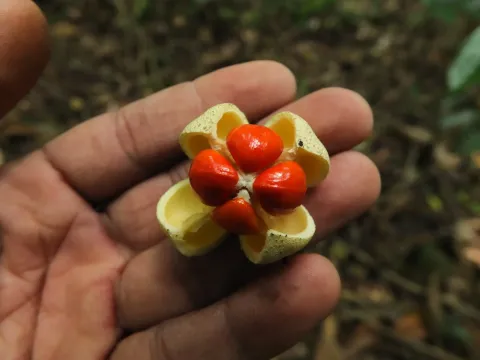
Euonymus grandiflorus
Euonymus grandiflorus
Euonymus grandiflorus, commonly known as the large-flowered spindle, is an elegant deciduous shrub or small tree belonging to the Celastraceae family. Its natural distribution spans the mountain regions of the Himalayas and parts of China, where it thrives in sheltered forest margins and woodland environments.
What the section contains
Euonymus grandiflorus
The plant performs best in a temperate climate with consistent moisture levels. While it shows some tolerance for colder temperatures, it is most productive and attractive when grown in areas with distinct seasonal changes, which help trigger its spectacular autumn foliage coloration, ranging from deep scarlet to purple.
Regarding soil, this species prefers deep, fertile loams that are well-drained yet moisture-retentive. It does not tolerate waterlogging, as the roots are sensitive to anaerobic conditions. Incorporating organic matter such as compost or well-rotted leaf mold into the planting hole improves soil structure and nutrient availability.
Sunlight exposure is a key factor in successful cultivation. While Euonymus grandiflorus can adapt to partial shade, it requires a significant amount of light to develop its dense, natural shape and maximize the intensity of its vibrant fruit and foliage colors. Full morning sun is ideal for optimal health.
Maintenance is generally straightforward. A layer of organic mulch applied annually serves to protect the root system from temperature extremes and helps maintain soil humidity. Pruning is mostly limited to removing dead or crowded branches to keep the center of the shrub open for better air circulation.
Aphids are the most common pests that affect the young, succulent shoots during the spring growth phase. They can be managed effectively using manual removal in small infestations or applying insecticidal soap if the population grows, ensuring the plant retains its vigor and leaf integrity.
Spider mites can become a nuisance during hot and dry summer spells. Their presence is usually indicated by stippling on the leaves and fine webbing. Increasing humidity around the plant and applying appropriate acaricides are effective strategies for managing these pests before they cause leaf drop.
Powdery mildew is a common fungal challenge, particularly when the shrub is planted in areas with poor airflow. Ensuring sufficient spacing between plantings allows for better breeze circulation, which significantly decreases the likelihood of fungal spores establishing themselves on the foliage surfaces.
Anthracnose can also manifest as dark, sunken spots on leaves or stems, especially in high-humidity climates. Proper sanitation is essential; this includes the prompt removal and disposal of all fallen leaf litter and infected branches to prevent the fungal cycle from continuing into the next growing season.
Root rot is often the result of poor soil drainage or excessive irrigation practices. The key to prevention is selecting a site that prevents standing water and applying water primarily to the root zone rather than overhead, which also helps keep the foliage dry and less susceptible to various fungal pathogens.