
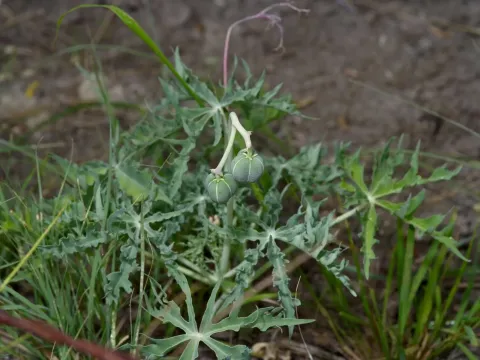
Jatropha cathartica
Jatropha cathartica
Jatropha cathartica is a fascinating succulent shrub belonging to the Euphorbiaceae family. Originating from the arid regions of Mexico and the southern United States, it is well-adapted to harsh environments with nutrient-poor soils.
What the section contains
Jatropha cathartica
The plant is defined by its distinctive swollen stem, known as a caudex, which stores water. This evolutionary adaptation allows the species to survive prolonged dry spells, making it a highly drought-tolerant ornamental crop.
Agricultural requirements include high light exposure and warm temperatures. During the active growth phase, it requires infrequent but deep watering, while during the dormant period, it should be kept almost completely dry to prevent rot.
The ideal growing medium is a fast-draining, mineral-heavy substrate. A mixture consisting of coarse sand, pumice, and a small amount of organic matter provides the aeration required for healthy root development.
While primarily cultivated for its unique architectural form in gardens and collections, researchers continue to study Jatropha species for potential industrial oil production and their botanical properties in arid landscapes.
The primary threat to the longevity of Jatropha cathartica is fungal rot caused by overwatering or poorly drained substrates.
Excess moisture during the winter dormancy period is particularly lethal, often leading to rapid tissue death and failure of the caudex.
Common pests include spider mites and mealybugs, which thrive in warm, low-humidity environments often found in greenhouse settings.
Regular monitoring of the foliage and stem is essential to detect early signs of infestation and prevent widespread damage to the plant.
Using systemic insecticides and maintaining proper air circulation are the most effective strategies for long-term protection against these threats.