
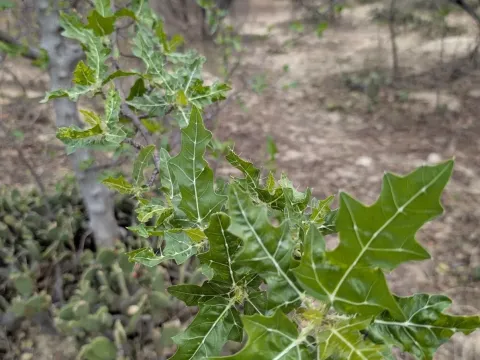
Jatropha phyllacantha
Jatropha phyllacantha
Jatropha phyllacantha is a distinct perennial shrub belonging to the Euphorbiaceae family. It is native to the seasonally dry tropical forests, particularly within the Caatinga region of Brazil, where it has evolved to thrive under harsh environmental conditions.
What the section contains
Jatropha phyllacantha
The plant is biologically characterized by its thorny stems and succulent-like structure, which allow it to store reserves during prolonged droughts. This adaptation makes it a highly resilient species suitable for marginal land reclamation and low-input agricultural systems.
Regarding soil requirements, the plant prefers well-drained sandy or rocky substrates. It strictly avoids waterlogged conditions, which can lead to rapid root rot. Ensuring proper drainage is the most critical factor for successful plantation establishment.
The climate requirements for Jatropha phyllacantha focus on warm, sunny environments with stable temperatures above +20 degrees Celsius. It is extremely sensitive to cold temperatures and frost, restricting its viable cultivation area to the tropics.
Agrotechnical practices involve maintaining appropriate spacing between plants to optimize light interception and ventilation. The plant requires minimal fertilization, as it is well-adapted to nutrient-poor soils, making it an economically viable option for sustainable land management.
The primary economic use of this culture involves the extraction of oil from its seeds. This oil is investigated for its potential in the biofuel industry, serving as a renewable source of energy that can be cultivated on lands not suitable for food crops.
Yield metrics are influenced by irrigation management and soil quality. While the plant is drought-tolerant, supplemental water during the flowering stage can significantly increase the seed count and oil content per individual shrub.
Secondary uses include the potential application of extracts in pharmaceutical research. The unique chemical profile of the plant is subject to ongoing studies to determine its concentrations of bioactive compounds, which may provide additional value to growers.
Harvesting typically involves manual collection of mature seed capsules. Because the fruit ripens sequentially, multiple passes through the plantation are often necessary to maximize the total yield while ensuring the seed quality meets industry standards.
The long-term yield stability of Jatropha species in arid zones helps in combating desertification. By maintaining soil structure and preventing erosion, the plantations contribute positively to the local ecosystem while providing a harvestable crop.
The main threats to Jatropha phyllacantha are fungal pathogens that affect the root system, especially when soil moisture levels are too high. Integrated pest management, focusing on proper drainage and sanitary pruning, is essential for maintaining plant health.
Various sucking insects, including mites and scale insects, can target the foliage and stems of the plants. Effective control involves regular scouting and, when necessary, the application of targeted biopesticides to mitigate infestations without harming local pollinators.