
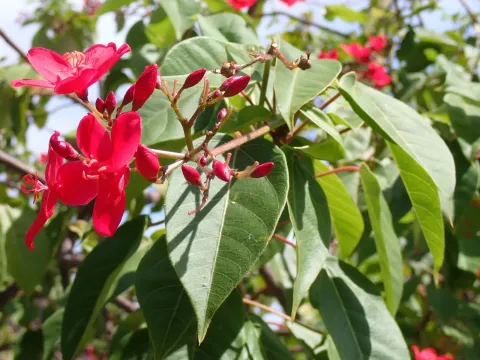
Jatropha integerrima
Jatropha integerrima
Jatropha integerrima is typically propagated via seeds or cuttings in a controlled greenhouse environment. Seeds should be sown in spring in a light, well-draining substrate, maintaining temperatures between 22–25 degrees Celsius.
What the section contains
Jatropha integerrima
For successful germination, high humidity and soil moisture are essential; therefore, seedling trays should be covered with plastic or glass until emergence. A stable temperature is critical to prevent seed rot within the medium.
Cuttings are preferred to maintain genetic consistency, and they should be taken in late winter or early spring. Cuttings must be left to dry for a day to allow the milky latex to seal, which significantly improves the rooting process.
Once a strong root system is established, seedlings should be transplanted into individual pots with nutrient-rich soil. Growth rates are heavily dependent on light intensity and timely repotting as the plant expands.
In regions with cold winters, this crop must be grown in greenhouses or as a container plant that is moved indoors before the first frost, as it does not tolerate sub-optimal thermal conditions.
Jatropha integerrima belongs to the Euphorbiaceae family and is native to the tropical regions of Cuba and the Caribbean. This evergreen shrub thrives under intense sunlight and requires high light levels for optimal physiological development.
The crop prefers fertile, sandy-loam soils with a neutral or slightly acidic pH. A critical agronomic requirement is the provision of excellent drainage to prevent root zone saturation, which can be fatal to the plant.
The optimal temperature range for active vegetation is 20–30 degrees Celsius, with the plant being highly sensitive to temperatures below 10 degrees. Winter maintenance involves reduced watering, but complete drying of the soil ball must be avoided.
Air humidity plays a vital role in plant health, particularly in indoor settings where heating systems often dry the air. Regular misting or the use of humidifiers is recommended to keep the foliage vibrant and prevent shedding.
During the active growing season, application of balanced fertilizers with a focus on phosphorus and potassium encourages continuous flowering. Excessive nitrogen should be avoided to prevent leggy growth and insufficient bud formation.
The most common pests affecting this culture in enclosed environments are spider mites and mealybugs. These pests thrive in dry conditions and can quickly weaken the plant by feeding on cellular fluids.
Root rot is typically the result of poor drainage or overwatering, which leads to anaerobic conditions in the soil. Preventive measures include ensuring the soil mix remains porous and that containers have adequate drainage holes.
Powdery mildew may occur when humidity is high and air circulation is poor, necessitating regular thinning of the canopy and improved ventilation. Early detection and fungicide application are recommended for control.
Scale insects can infest the stems, creating hard shells that protect them from contact insecticides. Systemic treatments are generally more effective in controlling these pests as they move through the plant's vascular system.
As a member of the Euphorbiaceae family, Jatropha integerrima contains a toxic milky sap that can cause skin and eye irritation. Always wear protective gloves and avoid contact with the sap during pruning or routine handling.