
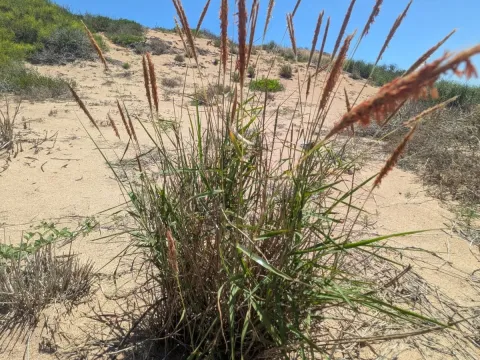
Eulalia fulva
Eulalia fulva
Eulalia fulva is a perennial grass species belonging to the Poaceae family. It is recognized for its ability to thrive in diverse environments, displaying significant resilience to harsh climatic conditions.
What the section contains
Eulalia fulva
The plant is native to warm-temperate and tropical regions, where it often dominates grasslands. It is highly valued for its adaptability to different soil types, ranging from sandy loams to heavier substrates.
Key biological features include a strong root system that allows the plant to access moisture during seasonal dry spells. This drought resistance makes it a highly sustainable option for pasture development.
Eulalia fulva thrives in full sun exposure. It demonstrates rapid early-season growth, which allows it to outcompete slower-growing grasses in its natural habitat.
Soil management for this crop is relatively straightforward; however, ensuring adequate drainage is essential to prevent root rot in wetter areas of the field.
Eulalia fulva is primarily utilized as forage for livestock. It provides a reliable source of green mass, especially when harvested before reaching the reproductive stage to maintain nutritional quality.
The yield of this crop can be enhanced through proper fertilization regimes, particularly nitrogen supplementation, which boosts leafy biomass production and forage protein levels.
The species exhibits excellent recovery characteristics after grazing or mowing. If managed correctly, the field can support multiple harvest cycles within a single growing season.
Beyond forage, the structural characteristics of the plant's biomass make it an interesting candidate for potential bioenergy applications, given its high fiber content.
Long-term field stability is a hallmark of this grass. A well-established stand can remain productive for several years, providing high utility for agricultural land management.
Fungal diseases are the primary concern for Eulalia fulva, particularly in environments with poor air circulation or extended periods of high humidity which facilitate infection.
Invertebrate pests can cause damage to the leaves and tillers. Regular monitoring is recommended to ensure that pest populations do not exceed the economic threshold for damage.
Root system damage caused by soil-dwelling larvae can lead to patchy stands. Integrated pest management strategies are often required to maintain uniform density.
Weed encroachment is a significant challenge during the initial establishment phase. Effective weed control in the first few months is critical for the success of the stand.
Improper grazing intensity can stress the plants, leading to a reduction in vigor over time. Sustainable management should balance grazing pressure with the recovery capacity of the grass.