
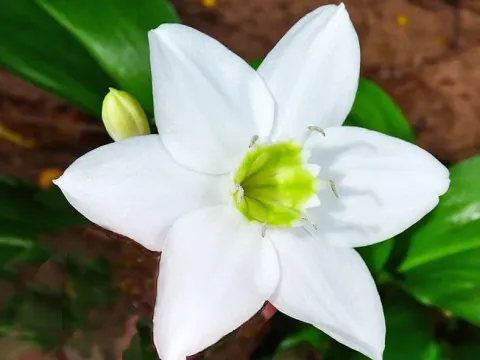
Eucharis
Eucharis
Eucharis, commonly known as the Amazon lily, is a bulbous perennial belonging to the Amaryllidaceae family. Originating from the tropical regions of Central and South America, it is highly valued for its fragrant, white, star-shaped blossoms.
What the section contains
Eucharis
The plant requires bright, indirect light for optimal development. Intense direct sunlight can damage the leaves, causing them to yellow or develop necrotic patches, while insufficient light often prevents the plant from flowering.
Soil requirements for Eucharis include a well-draining, nutrient-rich substrate. A professional mix often consists of equal parts potting soil, peat moss, and perlite or coarse sand to ensure oxygen reaches the root system and prevents waterlogging.
Temperature management is crucial, as this species thrives in tropical conditions. A consistent range between 18°C and 25°C is ideal for year-round growth, and the plant should be kept away from cold drafts and sudden temperature fluctuations.
Irrigation must be carefully managed according to the growth cycle. During active growth, the soil should be kept consistently moist; however, following the flowering period, a short dormancy phase with reduced watering is essential to trigger subsequent blooms.
Common pests affecting Eucharis include spider mites, mealybugs, and scale insects. These pests feed on the plant sap, often congregating under the leaves or along the stems, which can lead to significant decline if left unchecked.
The most serious diseases are bulb rot and red spot disease (Stagonospora), which are primarily caused by excessive moisture and poor air circulation in the growing medium, allowing fungal pathogens to colonize the bulb.
Integrated pest management involves regular visual inspections, manual removal of pests, and the application of horticultural oils or systemic insecticides when infestation levels warrant chemical intervention.
Disease control relies heavily on preventive cultural practices. Ensuring excellent drainage, using sterile soil during repotting, and avoiding overhead watering are key strategies to minimize the development of rot.
If a bulb is found to be suffering from rot, it must be removed from the pot, cleaned of decayed tissue, treated with a fungicide, and replanted in fresh, dry substrate to encourage recovery.