
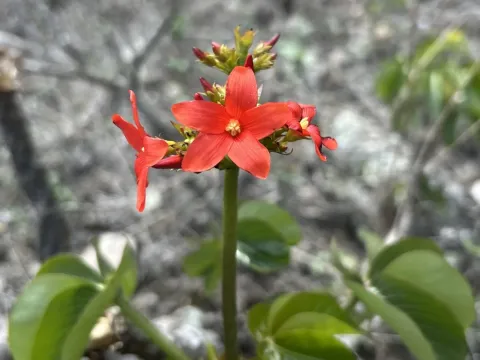
Jatropha macrantha
Jatropha macrantha
Jatropha macrantha is a perennial shrub belonging to the Euphorbiaceae family. It is native to the Andean regions of Peru and is recognized for its unique adaptation to high-altitude tropical environments.
What the section contains
Jatropha macrantha
The plant requires a well-draining, porous soil mix, typically consisting of sand, pumice, and loam. It is sensitive to waterlogging, which can cause significant damage to its succulent-like root system.
Optimal growth occurs under bright, indirect sunlight or direct morning sun. Providing adequate light is crucial for maintaining the plant's structural integrity and encouraging its characteristic crimson-red flowering.
Climate-wise, Jatropha macrantha thrives in temperatures between 18°C and 28°C. It does not tolerate freezing conditions and must be protected from frost in non-native climates, typically grown as a greenhouse ornamental.
Its botanical features include woody stems and clusters of vibrant, tubular flowers. These morphological adaptations help the plant conserve energy and water during the seasonal shifts common in its natural habitat.
Common pests include spider mites and mealybugs, especially in indoor environments with low humidity. Early detection is vital to prevent rapid infestation of the foliage.
Root rot caused by fungal pathogens is the most frequent disease, usually resulting from overwatering or poorly aerated soil. Prevention focuses on allowing the top layer of soil to dry out between watering sessions.
When pests are detected, the use of neem oil or horticultural soaps is recommended. For severe infections, systemic insecticides may be necessary to protect the plant's health.
Maintaining air circulation around the canopy helps reduce the risk of fungal infections and mold growth. Avoid overhead watering to keep the foliage and flowers dry and healthy.
Regular monitoring of soil moisture using a moisture meter or the finger test is essential. Healthy plants exhibit strong resistance to minor stressors, provided their basic environmental needs are met consistently.