
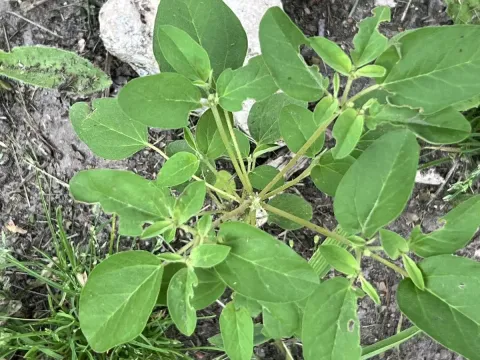
Croton monanthogynus
Croton monanthogynus
Croton monanthogynus, commonly known as prairie tea, is an annual herb within the Euphorbiaceae family. Seeds typically germinate in mid-to-late spring once soil temperatures are sufficient.
What the section contains
Croton monanthogynus
The species requires well-drained soil and plenty of direct sunlight to successfully establish its taproot system during the early developmental stages.
Planting depth should be shallow, usually about 1 to 2 centimeters, ensuring the small seeds remain in contact with consistent soil moisture for optimal emergence.
In natural habitats, the species relies on self-seeding, which allows for rapid colonization of disturbed soils and fallow fields throughout the season.
The vegetation period is strictly limited by frost; as a warm-season annual, it completes its life cycle entirely before the first hard autumn freeze.
This plant thrives in dry, rocky, or calcareous soils and is frequently found in open areas, roadsides, and degraded grasslands where competition is low.
It is remarkably drought-tolerant, exhibiting specialized adaptations in leaf structure that minimize transpiration during intense heatwaves.
Regarding soil fertility, it is not demanding and can thrive in nutrient-poor substrates, making it a potential candidate for soil stabilization.
Full sun exposure is a critical requirement for biomass production; shade usually results in stunted growth and lower seed set.
Proper drainage is essential to avoid anaerobic soil conditions, which can be fatal to the roots due to the high sensitivity of the plant to moisture stagnation.
Fungal pathogens such as root rot represent the primary threat to this crop, especially in areas where drainage systems fail to manage excess water.
Pests, including aphids and spider mites, are common in drier climates, though the plant's milky latex often acts as a natural deterrent against many herbivores.
Weed management during the early seedling stage is crucial, as Croton monanthogynus is initially sensitive to competition from more aggressive invasive species.
In terms of health, the plant is rarely infested by common agricultural pests, which simplifies integrated pest management strategies in its native range.
Biological monitoring is recommended to ensure that fungal spread remains contained, particularly during periods of unusually high humidity in the growing season.