
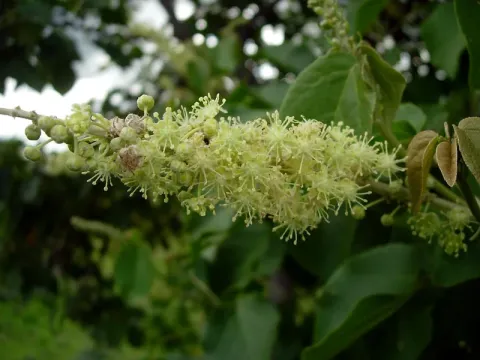
Croton macrostachyus
Croton macrostachyus
Propagation of Croton macrostachyus is primarily carried out via seeds in nurseries or directly within agroforestry systems. The optimal sowing time is just before the onset of the rainy season to ensure sufficient moisture for germination.
What the section contains
Croton macrostachyus
Seeds of this species exhibit delayed germination, so pre-treatment such as soaking in warm water for several hours is recommended. Sowing depth should range between 1 and 2 centimeters depending on the soil texture.
In large-scale plantings, seedlings are spaced 3 to 5 meters apart. This spacing allows for proper crown development and root system expansion, while also facilitating maintenance activities between the rows.
Weed control is essential during the early stages of sapling development. Mulching around the base of the trees helps retain soil moisture and suppresses weeds, creating a stable environment for young plants.
Seedling care requires regular watering during the first few months after transplanting. Once established, the species shows remarkable resilience to drought and typically does not require extensive irrigation.
Croton macrostachyus is a native of tropical Africa, thriving in regions with temperate and humid climates. The plant is well-adapted to altitudes ranging from 1000 to 2500 meters above sea level.
The species prefers deep, well-drained loamy soils but displays adaptability to a range of pH levels. Avoiding waterlogged areas is critical, as stagnant water can damage the root system of the trees.
Sunlight requirements are moderate; while the tree prefers full sun for vigorous growth, it can tolerate partial shading in its juvenile stages. This characteristic makes it an excellent choice for agroforestry systems.
The ideal temperature range for active vegetation is between 18 and 28 degrees Celsius. Being a tropical species, it is sensitive to severe frost, which limits its cultivation range to tropical and subtropical zones.
The extensive root system of the tree is highly effective in stabilizing soil on slopes, making it a valuable plant for erosion control programs and soil restoration in degraded agricultural lands.
The productivity of Croton macrostachyus is evaluated based on the yield of biomass, bark, and seeds, which are utilized in both pharmaceutical and technical industries. The tree can reach up to 15 meters in height.
Bark harvesting is conducted following sustainable practices to ensure the tree's survival. Avoiding complete girdling of the trunk is standard protocol, allowing for the periodic collection of medicinal resources.
Seeds are rich in oils that have potential technical and biofuel applications. Yield performance depends on the tree's maturity and weather conditions during the flowering phase in the early wet season.
In agroforestry systems, the tree serves as an important component, providing shade for companion crops. The cumulative output of these systems makes it an economically viable choice for small-holder farmers.
Significant yields typically begin 5 to 7 years after planting. Proper pruning techniques can maintain the tree’s productivity and health over several decades of cultivation.
Although Croton macrostachyus is generally hardy, it can be susceptible to specific tropical pests. Leaf-eating caterpillars and certain beetle species are known to cause damage to the foliage in dense plantations.
Fungal infections, particularly root rot, can occur if the soil remains waterlogged or if aeration is poor. Maintaining adequate drainage is the most effective preventative measure against such conditions.
Stem damage caused during manual pruning or harvesting can leave the tree vulnerable to secondary fungal attacks. Care must be taken to minimize mechanical wounds and disinfect tools between operations.
Integrated pest management, specifically the encouragement of natural predators, is the preferred strategy for protecting plantations. Chemical intervention should be reserved for severe outbreaks only.
Regular field scouting is recommended, especially after periods of high humidity. Early detection of affected trees allows for rapid intervention, preventing the spread of diseases across the agricultural site.