
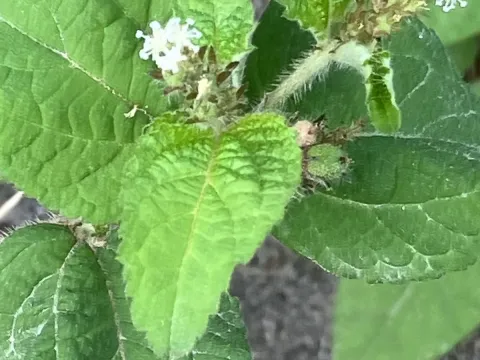
Croton hirtus
Croton hirtus
Croton hirtus is an annual herb belonging to the Euphorbiaceae family. It is native to tropical America and has successfully colonized various environments across Africa and Asia, often behaving as an invasive species.
What the section contains
Croton hirtus
The plant thrives in high-temperature environments with significant moisture. It is typically found in disturbed habitats, including agricultural fields, pastures, and roadsides where it can compete effectively with native flora.
Growing requirements for this species are relatively broad, allowing it to adapt to various soil types, ranging from sandy loams to heavier clay soils. It requires sufficient sunlight for vigorous vegetative development.
Agronomically, the plant is known for its rapid growth cycle and high seed production. These traits allow it to quickly dominate open spaces and become a competitive weed in agricultural cropping systems.
The plant is characterized by its distinct hairy foliage, which is a structural adaptation to protect the surface from excessive heat and moisture loss. This feature contributes to its overall resilience in tropical climates.
One of the primary defensive mechanisms of Croton hirtus is the production of latex in its stems and leaves. This chemical composition discourages many insects and herbivores, granting the plant a distinct survival advantage.
While the species is highly resistant to traditional pests, it can be susceptible to opportunistic fungal infections if exposed to prolonged, excessive moisture during the early seedling stage.
Control strategies for this weed center on mechanical cultivation. It is imperative to remove the plant before the flowering phase to prevent seed dispersal and the long-term accumulation of seeds in the soil seed bank.
In cases of heavy infestation, selective herbicide applications can be utilized. However, integrated management practices, including proper crop rotation and cover cropping, remain the most effective long-term strategies.
Failure to manage early emergence leads to significant competition for water and nitrogen. Consistent monitoring and preventive measures are essential for maintaining yield potential in affected agricultural areas.