
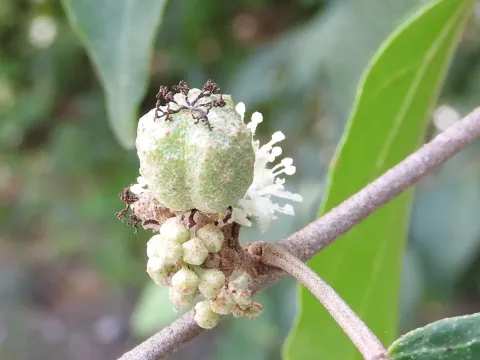
Croton pseudoniveus
Croton pseudoniveus
Croton pseudoniveus is a notable member of the Euphorbiaceae family, which is widely recognized for its diversity of plant forms. This woody species is native to tropical environments where it thrives under specific conditions of heat and high humidity.
What the section contains
Croton pseudoniveus
The climate requirements for this plant are stringent, requiring a stable tropical environment with temperatures consistently between 22 and 28 degrees Celsius. Any significant drop in temperature can disrupt the plant's metabolic processes and hinder its development.
Regarding light, the species prefers bright, indirect light. Exposure to intense, direct sunlight, especially in mid-day conditions, can lead to leaf scorching, whereas insufficient light levels often result in slow growth and poor structural development.
The ideal soil for cultivation must be well-drained and nutrient-rich.
- Sandy loam soils are generally preferred.
- Organic matter content should be high.
- pH should be maintained between 6.0 and 7.0 for nutrient availability.
Water management is critical, as the roots are sensitive to both waterlogging and severe desiccation. Agronomic practices should focus on maintaining a consistently moist, but never soggy, growth medium to ensure the health of the root system.
The primary threats to Croton pseudoniveus include pests such as spider mites and mealybugs, which are highly prevalent in tropical agricultural settings. These pests can rapidly colonize plants if moisture levels are poorly managed.
Fungal pathogens represent a significant risk, particularly under conditions of poor ventilation and excessive humidity. Root rot is the most common issue, often resulting from over-irrigation and poor drainage in the cultivation substrate.
Integrated Pest Management (IPM) strategies are essential for maintaining plant health. This includes regular scouting for pest populations and the application of biological controls or targeted insecticides during the early stages of infestation.
Prevention remains the most effective strategy. Proper plant spacing and sufficient airflow help reduce the likelihood of fungal outbreaks, while maintaining stable soil moisture helps the plant build natural resistance to stress-related pests.
In terms of usage, the plant serves as a source of diverse secondary metabolites which are studied for potential chemical applications. Furthermore, its structural features make it a candidate for specialized landscape and ecological rehabilitation projects.