
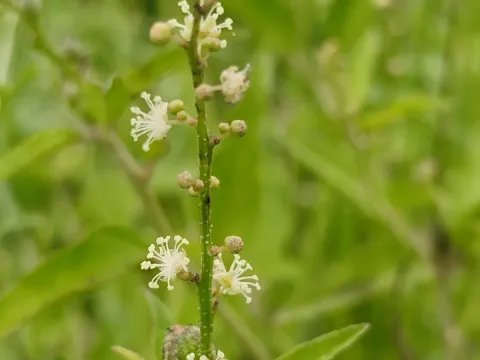
Croton sparsiflorus
Croton sparsiflorus
Croton sparsiflorus is a species within the Euphorbiaceae family, widely recognized in tropical and subtropical regions as a persistent and fast-growing weed.
What the section contains
Croton sparsiflorus
The plant exhibits prolific seed production, with seeds capable of remaining viable in the soil seed bank for several years, ensuring resurgence after land disturbance.
Germination is triggered primarily by rainfall, which marks the start of the growth cycle and allows the species to outpace the development of many cultivated crops.
Agricultural monitoring is critical in the early stages of crop development, as seedlings can quickly form dense mats that stifle the growth of neighboring plants.
Understanding the life cycle of this weed is essential for developing effective integrated pest management strategies to mitigate its negative economic impact.
This species thrives in open, sunny environments and is highly adaptable to a wide range of soil types, including degraded or low-fertility soils.
It possesses a strong root system that provides significant drought tolerance, allowing the plant to survive in conditions where other vegetation might struggle.
Optimal environmental conditions include high ambient temperatures and moderate to high humidity levels, which are characteristic of its native tropical range.
Effective management requires consistent soil cultivation and the removal of plants before they reach the flowering stage to prevent further seed dispersal.
The use of competitive cover crops can significantly reduce the establishment of Croton sparsiflorus by limiting its access to sunlight and soil nutrients.
The primary threat posed by Croton sparsiflorus is its role as a resource competitor, significantly reducing the yield potential of agricultural lands.
It can act as a secondary host for various plant pathogens and insect pests, facilitating their spread into fields of primary crops such as corn or soy.
Fungal diseases like Alternaria species are known to cause leaf damage on this weed, though they rarely provide sufficient control to eradicate the population.
Pest pressure from aphids and spider mites is common, and these populations often spill over into valuable crops, necessitating increased pesticide use.
- Manual weeding before seed set is highly effective.
- Systemic herbicide application in early vegetative growth stages.
- Crop rotation and mulching to suppress germination.