
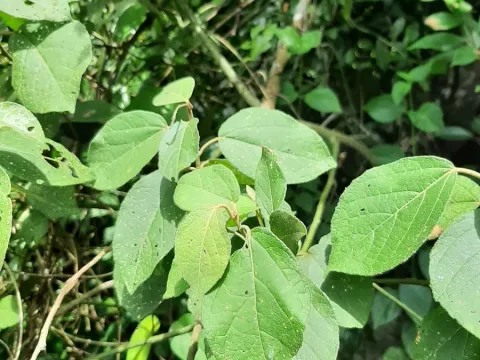
Croton laccifer
Croton laccifer
Croton laccifer is a member of the Euphorbiaceae family. This tropical species is native to South Asia, with Sri Lanka being its most well-known area of distribution and traditional cultivation.
What the section contains
Croton laccifer
The plant thrives in humid tropical environments. It requires a consistent, warm climate throughout the year to maintain its physiological functions and vigorous growth rate.
Regarding soil requirements, this crop demands well-drained substrate with high organic content. It is sensitive to waterlogging, which often causes root rot and poor development of the canopy.
Ample sunlight is essential for optimal health, although young plants may benefit from partial shade. Proper spacing between trees is recommended to facilitate adequate air circulation and sunlight penetration.
Botanically, it is recognized as a shrub or small tree. Its distinct feature is the production of latex-like resin, which is a characteristic trait of many species within this diverse botanical family.
The primary economic value of Croton laccifer lies in the extraction of resin from its bark. This process involves precise incisions that allow the resin to exude and harden upon exposure to air.
Traditionally, this resin served as a high-quality varnish or lacquer. It was widely used in traditional manufacturing processes, particularly in the regions where the tree naturally occurs.
Sustainable harvesting is crucial for the longevity of the tree. Workers must rotate tapping cycles, allowing the tree to recover from the stress of resin extraction and ensuring healthy sap flow.
The harvesting window is typically synchronized with the dry season, which helps in obtaining the purest quality of the substance. Post-harvest, the product is collected, dried further if necessary, and processed.
Modern studies continue to explore the applications of this resin in bio-based industries. The balance between traditional harvesting techniques and industrial demands remains a key focus for agriculturalists.