
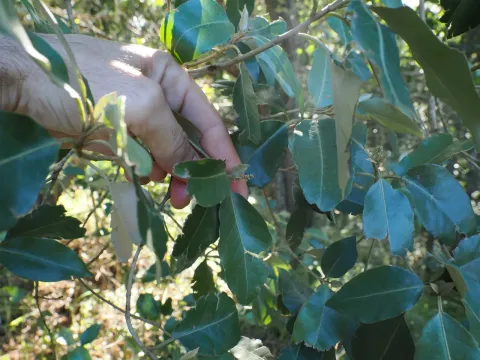
Croton insularis
Croton insularis
Croton insularis is a woody plant belonging to the Euphorbiaceae family. In its natural habitat, it manifests as an evergreen shrub or a small tree that exhibits typical morphological traits common to the genus Croton.
What the section contains
Croton insularis
The native range of this plant encompasses tropical regions of Australia and nearby islands, where it thrives in humid forests and open coastal areas. Commercial cultivation is largely restricted to tropical zones due to the plant's high sensitivity to frost and cold stress.
The crop requires consistently high temperatures and adequate atmospheric humidity for optimal growth. It generally prefers sunny locations, although specimens at early stages of development can tolerate partial shading during the hottest parts of the day.
Soil requirements focus on well-drained substrates rich in organic matter. Croton insularis does not tolerate waterlogging, meaning that heavy clay soils must be amended or managed through raised beds to protect the root system from decay.
Economic utility is primarily focused on the research of essential oils found within the foliage, as well as its landscape applications for soil erosion control in fragile coastal ecosystems where it serves as a robust stabilizing agent.
The main pests affecting Croton insularis under cultivation include sap-sucking insects, such as spider mites and scale insects, which tend to proliferate rapidly when humidity levels are improperly managed.
In conditions characterized by excessive moisture and poor air circulation, the plant is susceptible to fungal diseases like powdery mildew or root rot, often caused by water-saturated soil environments.
Effective disease prevention relies on maintaining strict agronomic standards, such as pruning for canopy aeration and managing water application rates during the plant's dormant or low-growth periods.
When pest infestations occur, the use of systemic biological pesticides is recommended to effectively manage populations while minimizing chemical impact on the plant tissue and the surrounding environment.
Regular inspection of the plant's canopy is essential for early detection of potential threats, allowing for prompt intervention before diseases or pests spread across the entire cultivation area.