
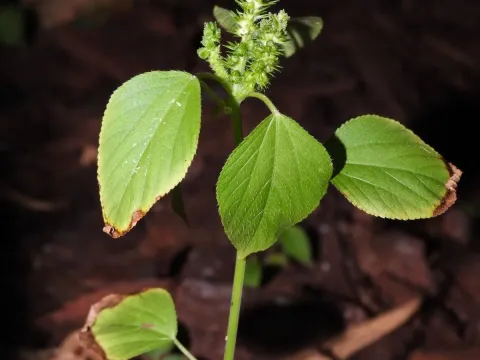
Acalypha setosa
Acalypha setosa
Acalypha setosa is a member of the Euphorbiaceae family. This species originates from tropical regions, requiring specific warm-climate conditions for successful propagation and growth.
What the section contains
Acalypha setosa
Seeds are typically sown in early spring, requiring high humidity and stable temperatures of approximately +22°C to +25°C to ensure uniform germination rates.
Cutting propagation is another reliable method, involving the selection of healthy shoots during the growing season. Cuttings should be placed in well-draining substrates to encourage rapid root development.
Once established, the seedlings or rooted cuttings are transferred to larger containers, ensuring the soil remains moist but not waterlogged to prevent stress.
Regular maintenance during the early growth stages, including pinching terminal buds, helps in developing a bushy structure, which is vital for the plant's overall health and appearance.
This crop demands consistent environmental conditions. It thrives in bright, indirect sunlight and is highly sensitive to cold drafts and temperatures below +15°C.
The soil should be nutrient-rich, humus-based, and possess an acidic to neutral pH level. Proper aeration is crucial to prevent the compaction of the root system.
Watering must be regular to maintain soil moisture levels throughout the growing season. During winter, watering can be slightly reduced, provided the humidity levels remain high.
High relative humidity is essential for Acalypha setosa. Regular misting or the use of humidifiers is recommended, particularly in indoor environments with dry heating systems.
Fertilization with a balanced, water-soluble fertilizer is necessary during the active growth phase to promote lush foliage and robust development.
Spider mites are the most frequent pests, thriving in low-humidity environments and potentially causing significant damage to the plant's leaf tissues.
Mealybugs and whiteflies can also colonize the plant, particularly in sheltered greenhouse conditions, leading to stunted growth and secondary viral infections.
Root rot is the primary disease threat, typically caused by overwatering and poor drainage, which allows fungal pathogens to attack the root system.
Cultural control methods, such as quarantine of new specimens and maintaining good air circulation, are the best preventive measures against pest outbreaks.
If an infestation occurs, targeted use of insecticidal soaps or professional-grade acaricides is required to regain control over the population of pests.