
African Milk Bush
Euphorbia umbellata
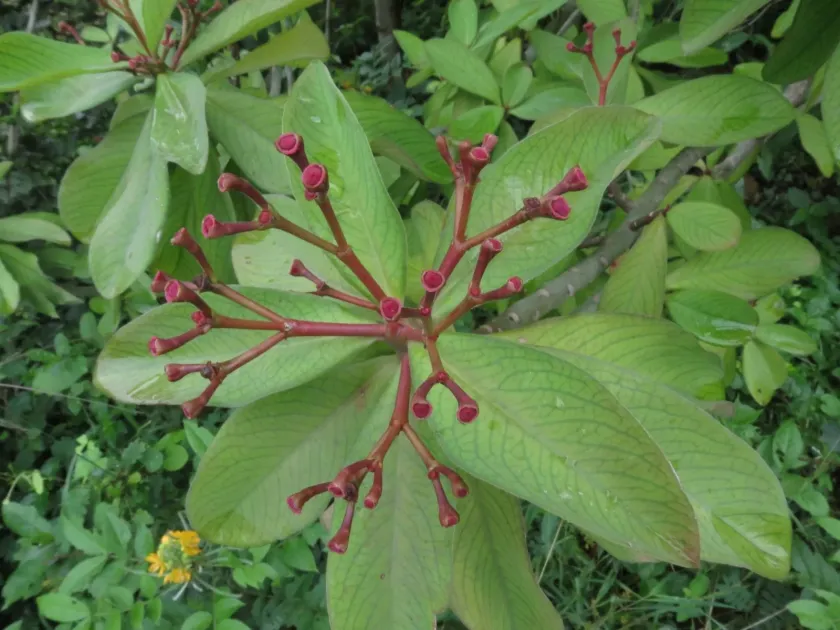
Description
Growing requirements
African Milk Bush (Euphorbia umbellata), formerly identified as Synadenium grantii, is a robust succulent shrub belonging to the Euphorbiaceae family. Originating from tropical Africa, it is a significant plant for research and specific agricultural applications.
The plant requires a strictly tropical climate to thrive, as it cannot withstand frost. It performs best in regions where temperatures remain consistently high, making it ideal for cultivation in equatorial or tropical zones.
Optimal soil conditions include well-drained, nutrient-rich substrates with a neutral pH. Due to its succulent nature, the plant is relatively sensitive to waterlogged soils, which can lead to rapid decay of the root system during the early stages of growth.
Agricultural management involves regular watering, though the plant displays high resilience to drought once established. It responds well to organic fertilization, which boosts the production of biomass and latex within its stems.
Industrially, Euphorbia umbellata is investigated for its high latex content, which can be harvested for rubber synthesis and pharmaceutical compounds. Its ability to grow on marginal lands makes it a candidate for sustainable industrial bio-cropping.
Main diseases and pests
Common pests affecting African Milk Bush include mealybugs and scale insects. These pests cluster on succulent stems, extracting plant fluids and weakening the overall vigor of the crop, especially in large-scale nursery environments.
Fungal pathogens such as Pythium and Phytophthora pose a severe threat in poorly drained soils. These pathogens cause root and collar rot, which are often fatal if not identified early in the growing season.
The milky sap (latex) contains toxic diterpene esters, which act as a natural deterrent against many herbivores but also represent a hazard for field workers, requiring specialized protective gear during harvesting.
Pest management relies on cultural controls such as proper spacing to ensure adequate airflow, which prevents the humidity levels that favor fungal growth and pest infestations.
Integrated pest management (IPM) strategies, including the use of neem-based oils or systemic insecticides, are recommended when infestations exceed economic thresholds, ensuring that crop yield is maintained without severe ecological damage.