
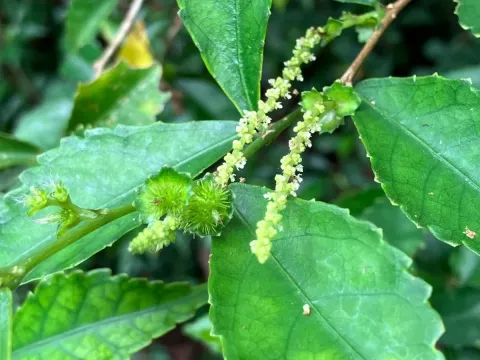
Acalypha siamensis
Acalypha siamensis
Acalypha siamensis is an evergreen ornamental shrub belonging to the Euphorbiaceae family. Native to Southeast Asia, it thrives in tropical environments and is highly valued for its dense, vibrant green foliage.
What the section contains
Acalypha siamensis
The plant requires full sun to partial shade for optimal growth. It is strictly a tropical species and performs best at temperatures between +20°C and +30°C, showing almost no frost tolerance in field conditions.
Cultivation requires well-draining, fertile soil with a slightly acidic to neutral pH. Consistent soil moisture is essential for the plant to maintain its lush appearance; it does not tolerate prolonged water deficit.
Agrotechnically, Acalypha siamensis is prized for its extreme tolerance to shearing. In tropical and subtropical horticulture, it is commonly planted as a dense hedge or shaped topiary due to its rapid biomass recovery.
Botanically, the plant develops a dense branching structure with ovate, dark green leaves. While it can reach heights of 2–3 meters if left unpruned, it is frequently kept at a height of 1 meter for formal landscape designs.
Common pests affecting this species include spider mites and aphids, especially in conditions with poor air circulation. These pests extract sap from the succulent new growth, causing curling and yellowing of the leaves.
Powdery mildew is the most frequent fungal disease, often triggered by excessive humidity or poor drainage. Proper spacing during planting is the primary cultural defense against fungal pathogen buildup.
Root rot remains a significant threat if water pools around the root zone. Ensuring well-aerated soil and proper drainage channels in the landscape is crucial for the long-term health of the shrub.
Management of these threats involves the strategic use of systemic fungicides and miticides during peak humidity periods. Integrated pest management (IPM) practices, including removing debris, are highly recommended.
Regular sanitation, such as removing dead or overcrowded branches, helps improve light penetration and airflow within the canopy, significantly reducing the probability of disease outbreak.